 Careers
 Poslovi


For many farmers, obtaining an organic certificate might seem like an unnecessary burden. It requires additional paperwork, strict adherence to farming practices, and often the restructuring of the production process. However, the benefits far outweigh the challenges.
Certified organic products command higher prices and enjoy more stable market demand. For example, the organic grain market in Germany is significantly less dependent on global market events. Organic crop prices consistently outperform conventional prices, with certified organic crops commanding significant premiums. Our comprehensive analysis of organic crop prices across seven crops shows that certification directly affects farm profitability. Additionally, organic farming offers environmental benefits and supports a more sustainable farming system.
Our Organic Certification Journey
At our large-scale organic farm, we maintain multiple organic certifications.

Besides the EU organic standard, stricter organic certifications exist in Europe:
- Naturland is a global association for organic agriculture that offers one of the most rigorous, internationally recognized certifications. This certification ensures that products adhere to strict ecological and social standards.
- Bio Suisse is a private organic certification with stricter requirements in certain areas (e.g., biodiversity) and is essential for the sale of organic products in Switzerland.
We first obtained Bio Suisse Organic certification in 2022 and Naturland in 2023 and have been renewing them ever since.
We have compiled a step-by-step guide to organic certification, along with a standards comparison table, to help fellow farmers navigate different organic certifications and understand their potential benefits.
Compare organic standards
Get a free PDF of our Standards Comparison table straight to your inbox!
Since our products originate in Serbia, we sometimes face challenges selling them in the EU due to country-of-origin preferences. However, our adherence to strict standards such as Bio Suisse Organic and Naturland sets us apart in a crowded market. These certifications attract premium buyers who prioritize sustainability, traceability, and quality. This approach not only provides financial advantages but also builds consumer trust and strengthens our long-term market presence.
How does certification affect organic crop prices?
Our harvest results for the 2025 season provide detailed information on yields and quality parameters for each crop.
Oats
3.638 t
Sunflower
1.925 t
Peas
1.639 t
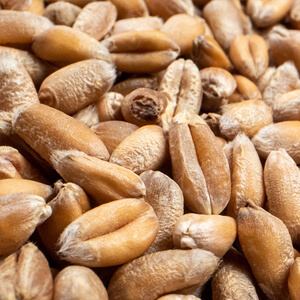
Wheat
1.974 t
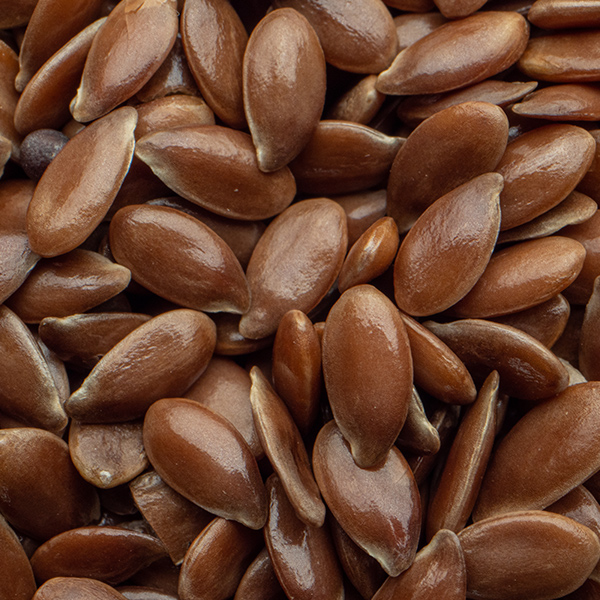
Flax
272 t
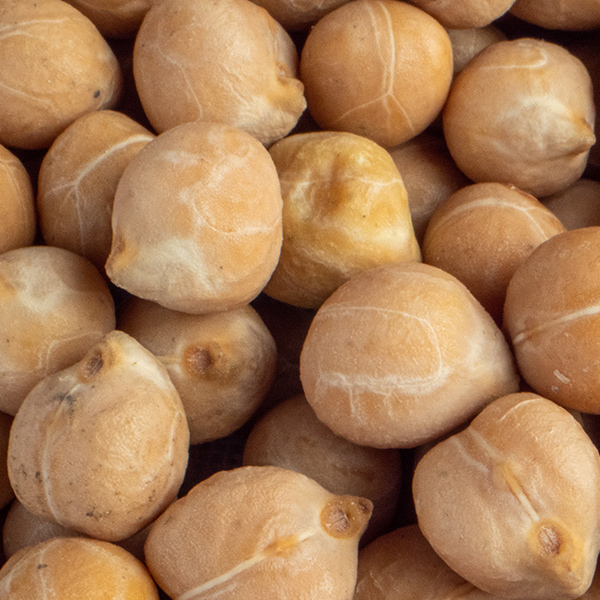
Chickpeas
212 t
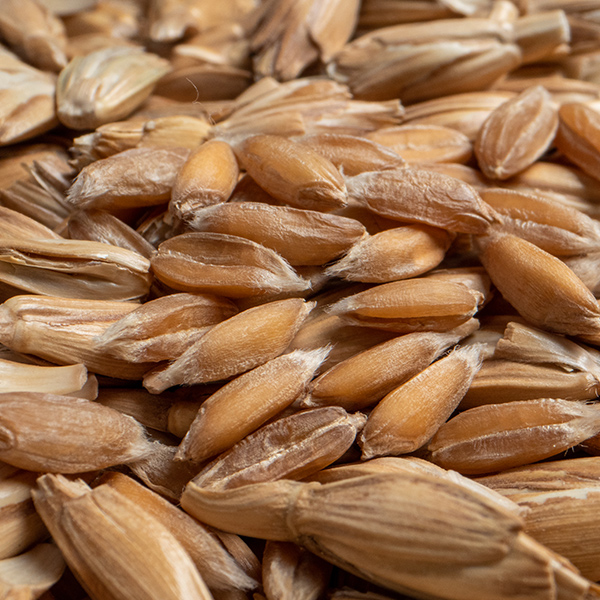
Spelt
175 t
We will now explore how organic certification, particularly when combined with additional standards such as Bio Suisse or Naturland, leads to significant price increases for each crop. Additional parameters, such as gluten-free, also affect pricing. It is important to note that we sell crops exclusively for human consumption, and the price differences at the bottom reflect only the food market.
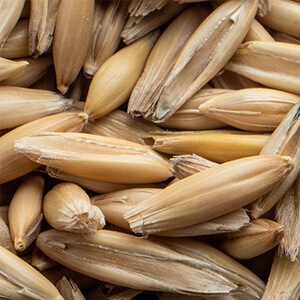
In the 2024/2025 season, we grew oats on 850 hectares, with a harvested quantity of 3.638 tonnes and an average yield of 4,3 t/ha.
Oats are valuable in crop rotation because they are robust and well adapted to low-input and organic systems. They are especially important in LoginEKO’s crop rotation because of their strong competitiveness against weeds. In addition, their natural yield exceeds the regional average.
244 tonnes were grown organically but sold without organic certification because the fields were either classified as risk zones or were still in conversion. This quantity was sold at 205 EUR per ton.
The rest of our oats were certified to the EU organic standard, Naturland, and Bio Suisse, and these crops commanded a 30-45% premium over the conventional price. We sold 400 tonnes of organic, gluten-free oats at a 50-80 % premium over conventional prices.
| Crop | Price for conventional crops (FCA Serbia: EUR/t)* | EU organic price premium (price increase to conventional crops) | Naturland and Bio Suisse (price increase to conventional crops) | Gluten-free Naturland (price increase to conventional crops) |
| Oats | 180 | + 10-20% | +30-45% | +50-80% |
*first quarter of 2026
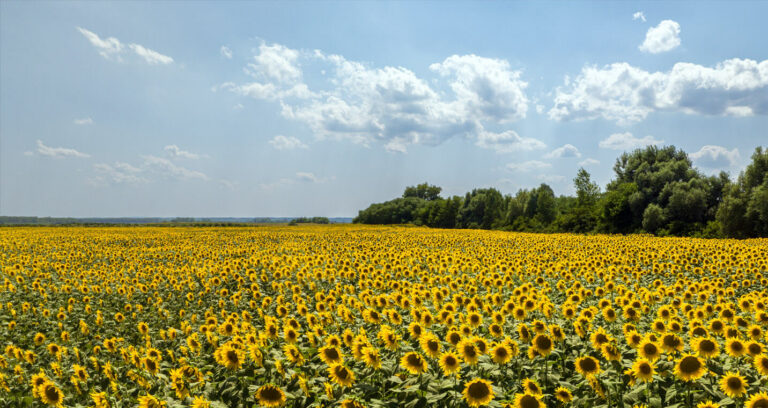
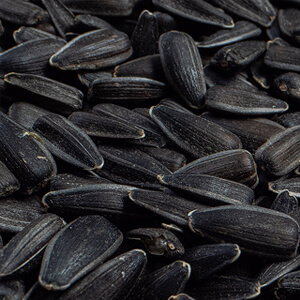
We grew sunflower on 915 hectares, with a harvested quantity of 1.925 tonnes and an average yield of 2,1 t/ha.
Sunflower plays a specific role in our 5-year crop rotation model, serving as the final crop. As nitrogen scavengers, they efficiently capture residual nitrogen from deeper soil layers.
The conventional price for sunflower was 470 EUR/t in the first quarter of 2026. All our sunflowers were organically certified under Naturland and Bio Suisse standards and sold at a 45-50% premium.
| Crop | Price for conventional crops (FCA Serbia: EUR/t)* | EU organic price premium (price increase to conventional crops) | Naturland and Bio Suisse (price increase to conventional crops) |
| Sunflower | 470 | + 25-30% | +45-50% |
*first quarter of 2026
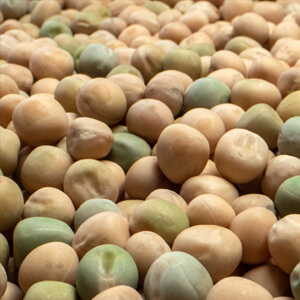
We grew peas on 632 hectares, with a harvested quantity of 1.639 tonnes and an average yield of 2,6 t/ha.
Peas are highly valuable in crop rotation because they fix atmospheric nitrogen, improve crop diversity, and eliminate the need for external nitrogen inputs. At LoginEKO, peas are a central part of the legume-based model for large-scale food production, as they provide free nitrogen for four subsequent crops in our crop rotation. In this sense, pea is not only a protein crop but also a biological engine for nutrient provision in a livestock-free organic system.
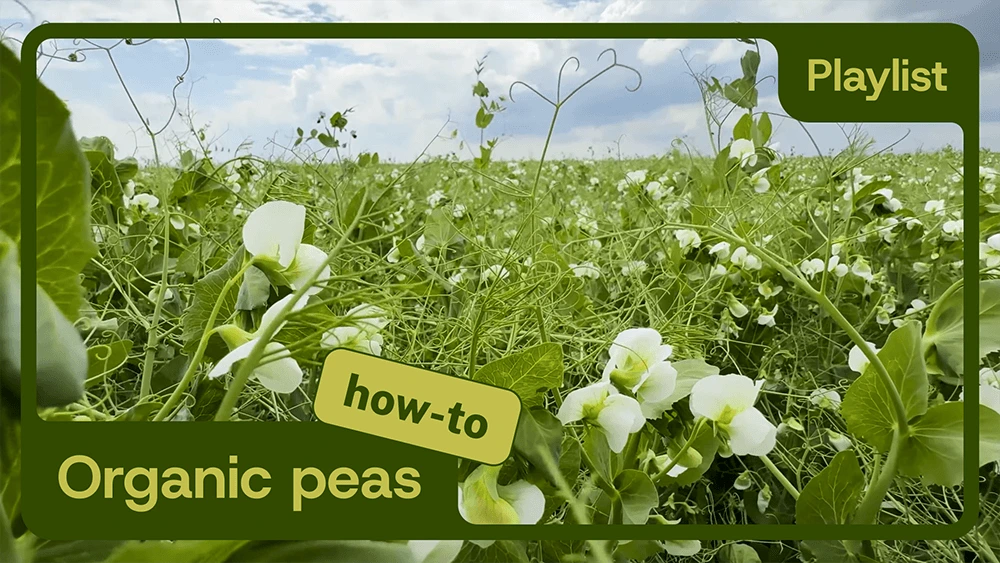
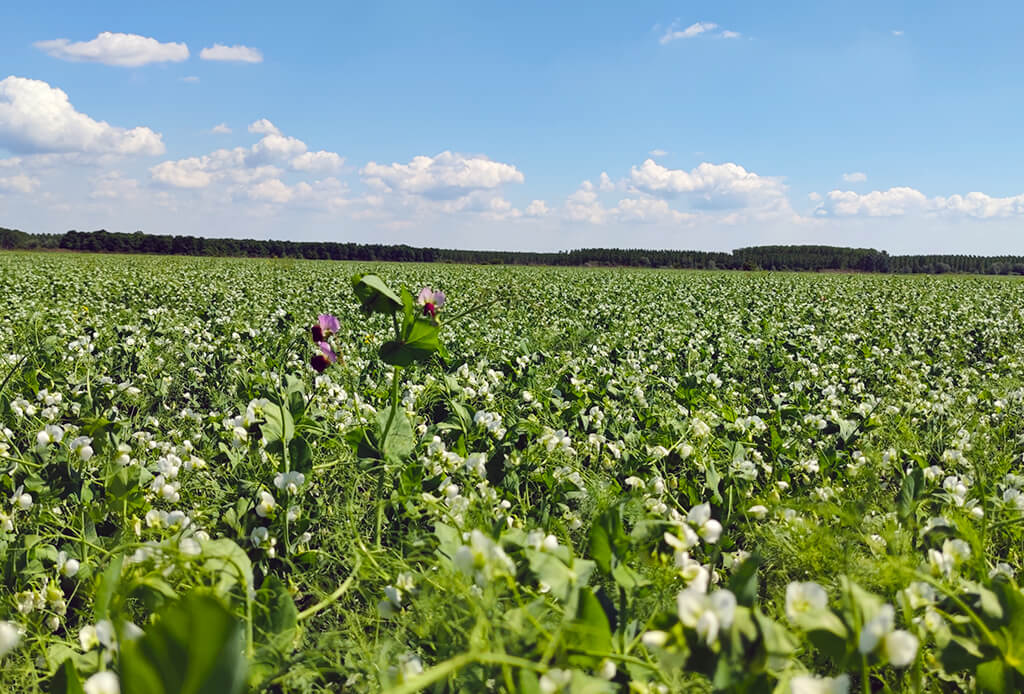
In the 2024/2025 season, we grew winter peas exclusively. Their grain protein content was 18.6%, which is below the typical market requirements for human consumption, usually ranging from 21–22% to as high as 25–26%, depending on the buyer. Despite this, we have sold the majority of our organic harvest at a 25% premium over the conventional price.
A portion of our harvest (382 tonnes) consisted of peas grown organically but sold without organic certificates, either due to risk-prevention measures or because they were grown on fields in conversion.
| Crop | Price for conventional crops (FCA Serbia: EUR/t)* | Naturland and Bio Suisse (price increase to conventional crops) |
| Peas | 285 | 20 -25% |
*first quarter of 2026
In 2025, we grew organically certified wheat on 242 hectares, harvesting 1.281 tonnes, with an average yield of 5,3 t/ha.
The bottom table shows data for conventional wheat in the Serbian market and for EU-organically certified wheat, which achieved a 20-25% premium. For stricter standards, such as Naturland and Bio Suisse, the premium increased to 50-60%.
| Crop | Price for conventional crops (FCA Serbia: EUR/t)* | EU organic price premium (price increase to conventional crops) | Naturland and Bio Suisse (price increase to conventional crops) |
| Wheat | 180 | +20-25% | +50-60% |
*first quarter of 2026
By June 2026, we had managed to sell the majority of our wheat under the Naturland and Bio Suisse premium.
In addition to organically certified wheat, we harvested 694 tonnes of wheat from fields that were either in conversion, as it takes two years before crops can be sold with an organic certificate, or had parts flagged as risk zones. We flag parts of fields as risk zones due to the risk of pesticide drift from neighbouring conventional farms, and we harvest those strips separately. We sold these quantities of wheat in the conversion and risk zones at the conventional price of 175 EUR/t (the price of conventional wheat after harvest in 2025).
Flax is one of the most profitable crops in our portfolio. Although it is a low-yielding oil crop, it has strong market demand and commands high premiums, especially as gluten-free organic flax.
We grew flax on 145 hectares in 2025, harvesting 272 tonnes and achieving an average yield of 1,9 t/ha.
21 tonnes of flax were grown organically but sold without certificates (due to risk prevention). We sold this flax at the conventional price of 525 EUR/t.
Organically certified flax achieved an 80–95% price premium over conventional flax, while gluten-free organic flax achieved a 157% premium. We have already sold almost all our gluten-free flax at this premium, with 15 tonnes still remaining in stock.
| Crop | Price for conventional crops (FCA Serbia: EUR/t)* | Gluten-free Naturland (price increase to conventional crops) |
| Flax | 525 | +157% |
*first quarter of 2026
In 2025, we grew chickpeas on 176 hectares, harvesting 212 tonnes, with an average yield of 1,2 t/ha.
Chickpea is another legume in our crop rotation, usually grown in the third year. Although chickpeas are not as efficient at fixing nitrogen as some other legumes, they are an excellent addition to crop rotations because they provide pest breaks, are drought-tolerant, and still act as a biofertiliser. Their deep root systems can support soil structure, help break up compacted soil, and improve water infiltration.
Last season, we produced only Naturland and Bio Suisse-certified chickpeas and achieved a 30% price premium.
| Crop | Price for conventional crops (FCA Serbia: EUR/t)* | Naturland and Bio Suisse (price increase to conventional crops) |
| Chickpea | 850 -900 | +30% |
*first quarter of 2026
We grew spelt on 93 hectares and harvested 175 tonnes, achieving an average yield of 1,9 t/ha.
A small quantity of spelt (3,7 tonnes) was grown organically but sold without organic certification. The rest was sold at a 70% premium over the conventional price because it was certified under Naturland and Bio Suisse standards.
| Crop | Price for conventional crops (FCA Serbia: EUR/t)* | Naturland and Bio Suisse (price increase to conventional crops) |
| Spelt | 200-210 | +70% |
*first quarter of 2026
As we transition to gluten-free production and crop rotation, we grew spelt this season but will not grow it next season. The only gluten-containing crop we grow in 2026 is wheat, which is grown and later on stored at a separate location to prevent gluten contamination.
Organic Crop Prices and Costs of Organic Certification and Gluten-Free Testing
Yes, obtaining organic certification and conducting gluten-free testing involve additional costs.
Organic certification costs depend on the country and the certification body selected by each farmer. In our case, the cost of obtaining organic certification in Serbia, together with EU Organic, Naturland, and Bio Suisse certification, was EUR 5,7 per hectare in 2025. This was calculated for our entire farm of 3.710 hectares, including both arable land and biodiversity zones.
Serbian organic certification, EU Organic, and Bio Suisse operate on a simple basis: the cost is calculated per audit service. Naturland’s cost structure differs in that it includes several components: a certification audit cost of 0,7 EUR/ha, an annual membership fee of 0,8 EUR/ha, and a sales-based license fee of 1,2% of invoices for crops sold under the Naturland certificate. The per-hectare Naturland costs apply only to arable land; biodiversity zones are excluded.
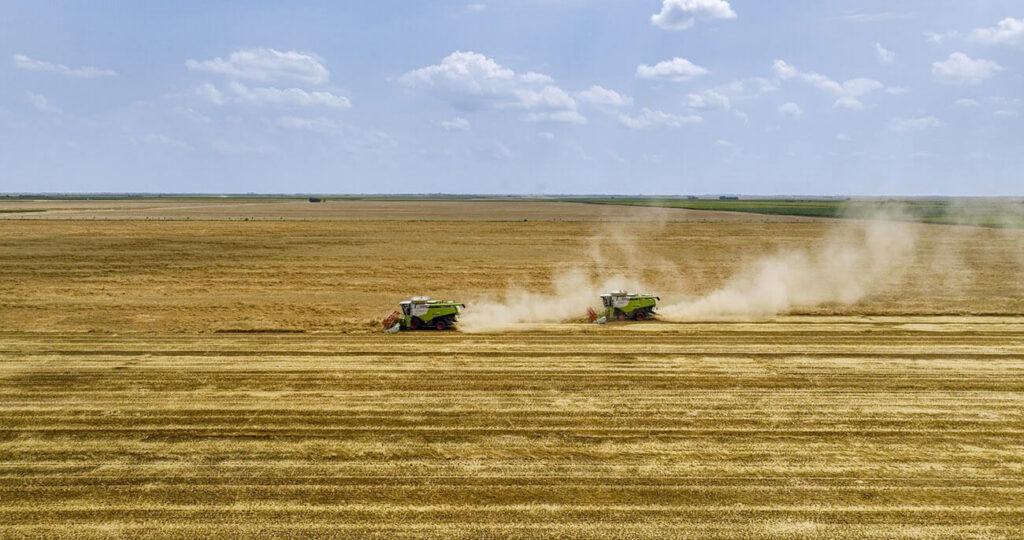
The total cost of 5,7 EUR/ha does not include the sales-based license fee, as we have not yet sold all our crops. Our anticipated additional cost for the 2025 harvest is EUR 3,6 EUR/ha.
We calculated the cost breakdown per hectare to make the comparison easier. There is no standard per-hectare price list for certification. Certification bodies determine their fees using internal formulas that account for the volume of work involved, the time invested in the certification process, and the overall partnership with the client.
Actual certification costs can also vary depending on several factors: the total area being certified, the number of locations included, the quantity and variety of inputs used, such as seeds and other production materials, and the complexity of the organisation’s structure and geographic setup.
When exporting goods from a non-EU country, export documentation is required and incurs additional costs.
For gluten-free products, we transitioned from external laboratories to in-house testing, reducing costs from 29,8 EUR per sample to 12 EUR per sample. Nevertheless, the price increases for organic, Naturland, and Bio Suisse certifications significantly outweigh the costs, generating substantial net price premiums.
Additional cost savings in organic farming
Conventional farming incurs high costs due to the use of mineral fertilizers and synthetic pesticides. Organic certification prohibits these inputs, which can generate significant cost savings.
For example, in wheat production, we eliminate the use of up to 600 kg of mineral fertiliser per hectare and further reduce costs by avoiding synthetic pesticides. Instead, we rely on mechanical weed control. In some crops, such as oats, wheat, and spelt, we achieved strong yields last season without any additional field operations between sowing and harvest. This contrasts with conventional farming, which typically requires multiple pesticide applications during the growing season.
Our large-scale, low-input, legume-based farming model takes these cost savings further. As a livestock-free farm, we also do not use animal manure, eliminating those costs. Instead, we rely on multi-year crop rotations, with legumes enriching the soil and providing nitrogen for four subsequent crops.
This approach makes organic farming not only environmentally sustainable but also financially viable.
Organic Certification and Traceability: Driving Sustainability and Increased Revenue
As our legume-based farming model has demonstrated, focusing on sustainability does not compromise profitability. By strategically reducing input costs, optimizing crop rotations, obtaining organic certifications, and ensuring full traceability, we have increased revenue while maintaining soil health and biodiversity.
Sustainable farming is no longer just an ethical choice. It is also a financially sound business decision that aligns with modern consumer expectations, market demand, and regulatory trends.
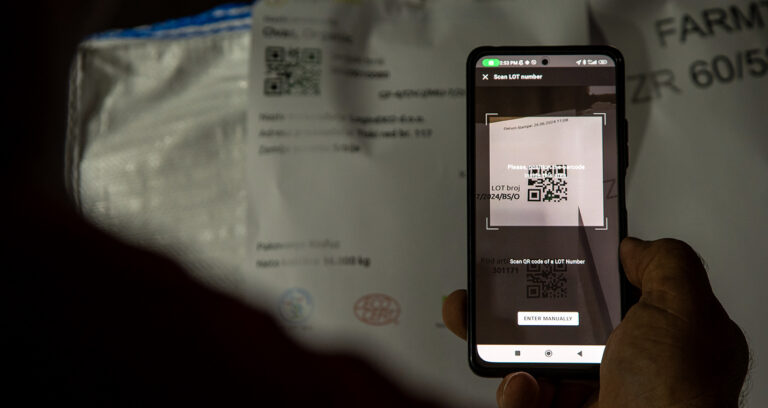
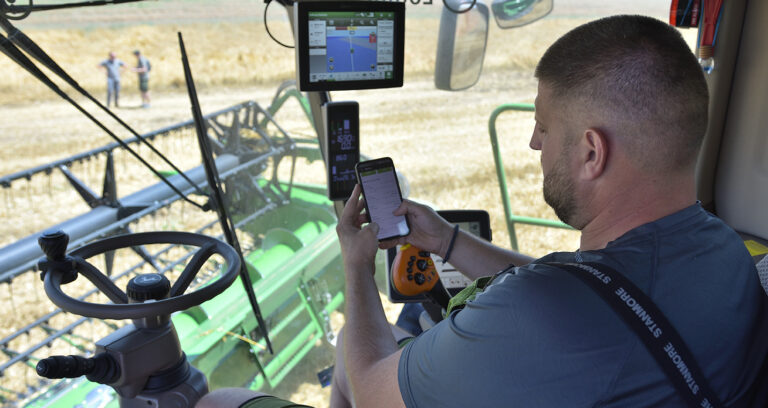
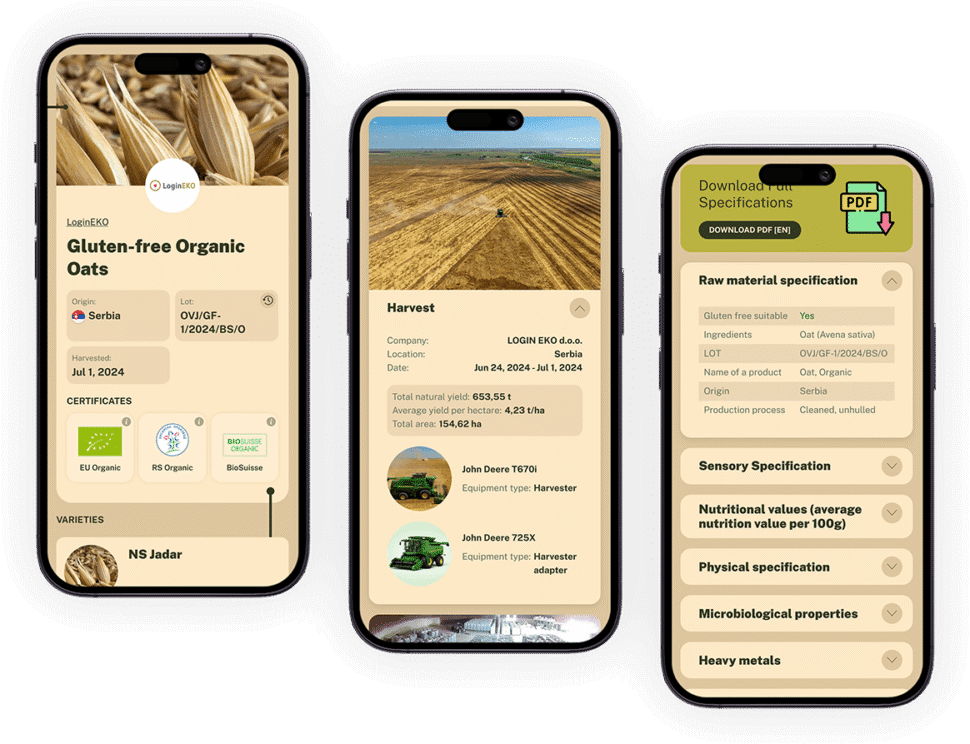
Traceability plays an important role in this model. It allows us to document and openly show how crops are grown, including which seeds were used, which field operations were performed, where crops were stored, and which certifications they carry. This transparency strengthens buyer confidence, supports premium pricing, and demonstrates that organic production standards are not merely claimed but verified through publicly available data.
Climate resilience is also becoming a crucial factor in agriculture. By avoiding chemical inputs, focusing on soil-building practices, and working with natural ecosystems, sustainable farms are better prepared for climate change. This adaptability is another financial advantage, as resilient production systems are less exposed to complete crop losses caused by unexpected weather shifts.
For farmers considering a transition to sustainable and organic production, the evidence is clear: transparency and certification are worth it. They open doors to better prices, more stable markets, and a more resilient future for agriculture.
Investing in sustainable production is not only about protecting nature. It also helps farmers improve profitability, grow healthy crops, and maintain productive land for future generations.