 Careers
 Poslovi
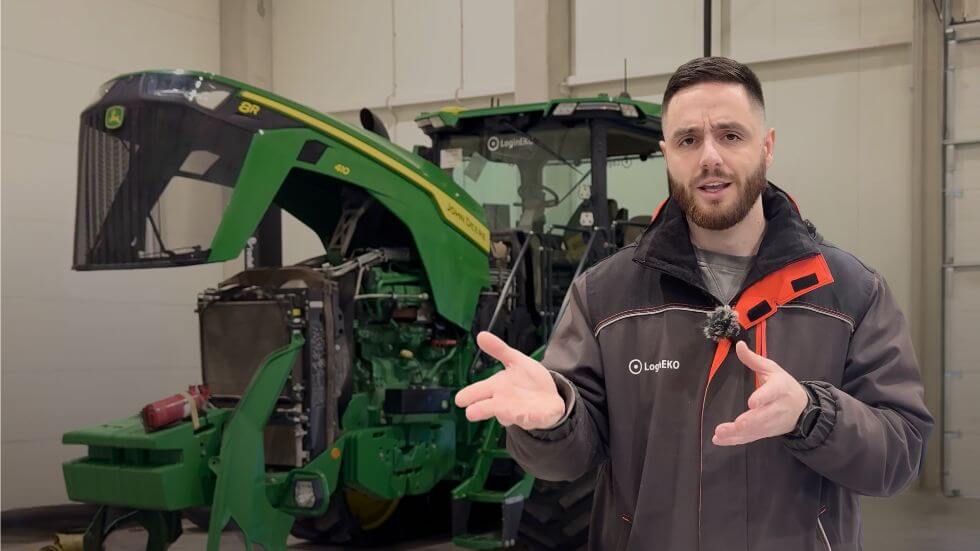
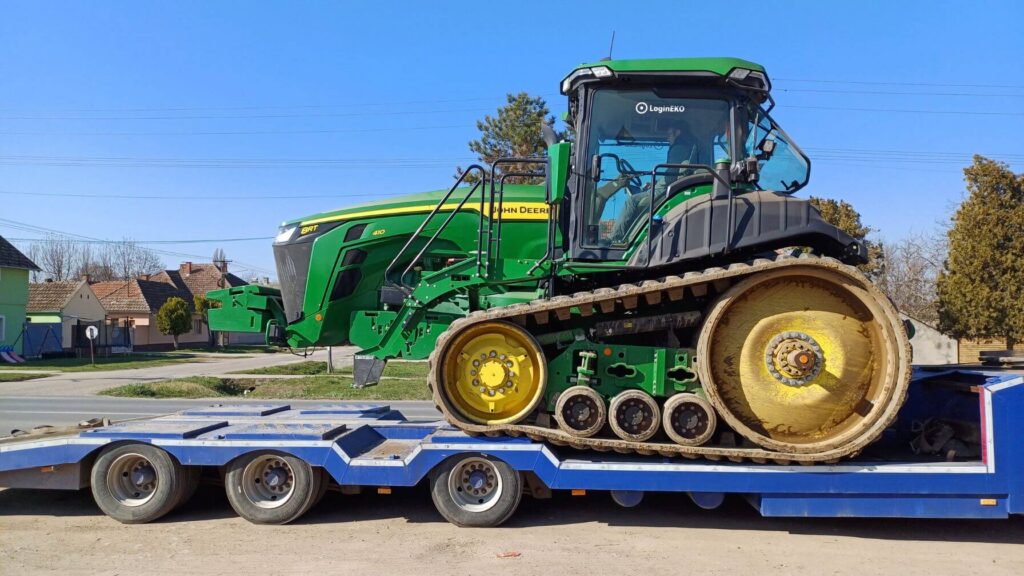
That is the question we have been living with since September 2024. We have two John Deere tracked tractors at LoginEKO, one at our northern location and one at our southern location, bought in 2021 and 2022 and still under extended warranty. For more than a year, we dealt with a problem we simply could not solve: smoke, oil consumption, and oil leaks. Six service interventions, multiple parts replaced, and the root cause stayed hidden until January 2026.
This is the story of that John Deere tractor problem, what we did about it, and what we finally came to. We are sharing both the wins and the challenges with you, exactly as they are.
Why We Bought Tracked Tractors in the First Place
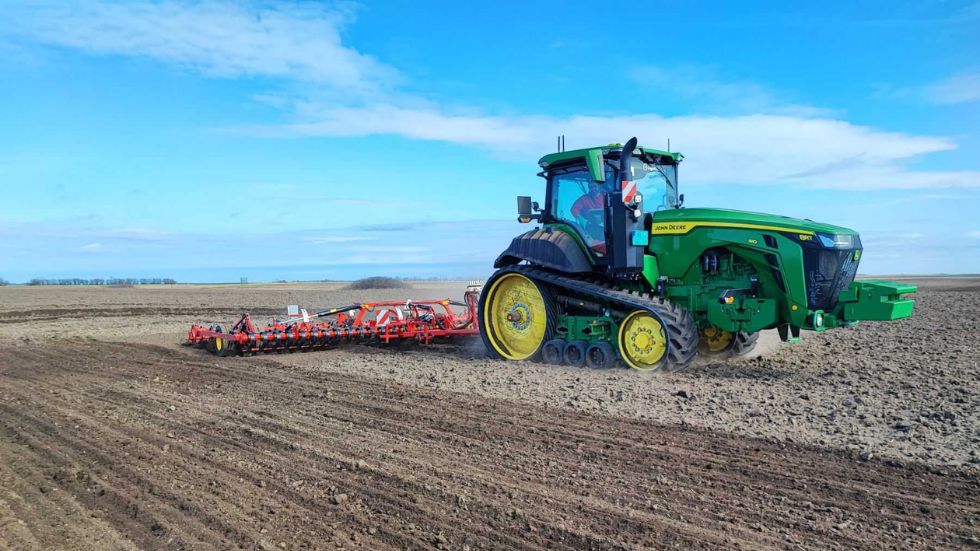
We chose tracked tractors for two specific reasons: their advantages in wet working conditions, and their reduced compaction on clay soils. On heavy soils in Vojvodina, that is a real consideration, especially in spring and autumn when we need to be in the field but the ground is not always cooperating.
But when we needed those tractors most, in spring and autumn fieldwork, we kept seeing the same issues. Smoke at our southern location. Smoke, oil leaks, and oil consumption at the northern location. Because we did not know what was causing it, we feared a larger failure. And because we did not want oil dripping onto our fields, we kept pulling those tractors out of service, which delayed our work.
As organic producers, we cannot work with a machine that leaks oil onto the fields where we grow food. That is why we kept clear records, and we did not give up until the problem was solved.
The Timeline: Six Service Interventions Across 14 Months
Here are each intervention in order, along with what we learned from it.
End of September 2024. Smoke and oil vapor began coming out of the tractor at our northern location. The classic dilemma: was it the oil vapor separator, the engine, or something else entirely?
Early October 2024. Two days after the problem appeared, the service team came out and concluded the oil vapor separator had to be replaced, but the tractor could keep working. We bought the part and replaced it at our own expense because it was not covered by warranty, unlike the gearbox and the engine, which were.
October 16, 2024. We filed another complaint. This time, it was found that oil was leaking from the gas pipe.
November 24, 2024. The service team came out again and replaced the oil vapor separator at their own expense because it was established that we had changed it a month earlier, and the problem was not in that part at all.
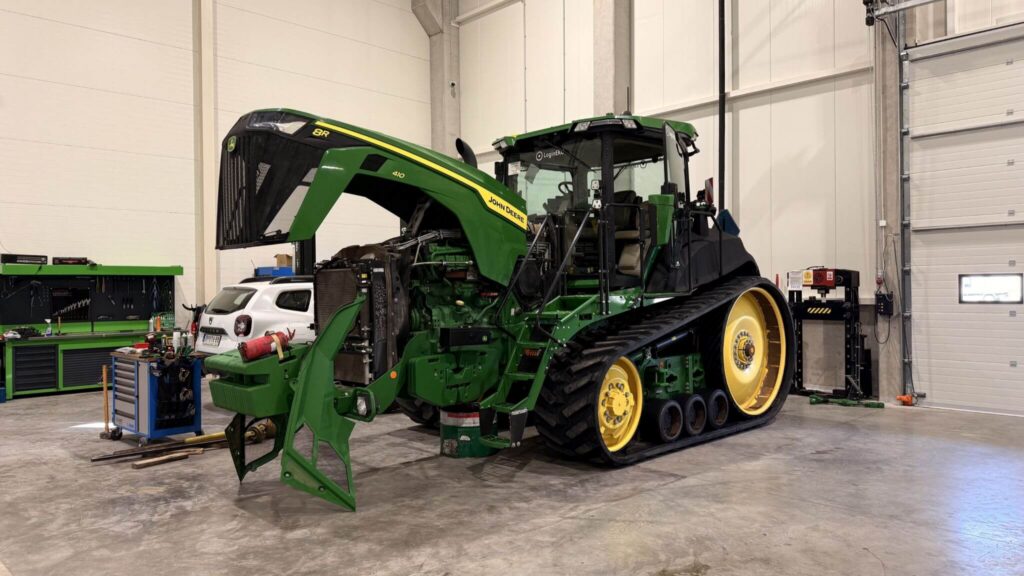
Spring 2025. When spring fieldwork started, we again noticed smoke and oil leaks. The tractor was sent to the service shop in Bačka Topola, and under warranty, the piston rings, bearings, and water pump were replaced. The engine was dismantled, but no major fault was found.
August 2025. We once again saw smoke and oil consumption. A diagnostic test was performed in which crankcase gas pressure was measured, and all parameters indicated that compression was fine. We kept using the tractor while monitoring oil consumption.
November 2025. After an eight-day in-house test, we saw that oil consumption remained high. That was the signal for us to file the complaint again and not give up, because the root cause had clearly not been removed.
January 2026. The service technicians came again at our request, and for the first time, they found that the turbocharger had excessive axial play, which could be the solution to this problem.
The Repair and the Test
On January 27, 2026, the tractor’s turbocharger was replaced. The next day, the tractor was tested on a dynamometer under heavy load. There were no oil leaks. No smoke. The service technicians were convinced the problem was now solved.
We later tested it during seedbed preparation, and you can see the results in this short video:
The same process is now underway at the southern location, where even during the latest inspection, traces of oil were found around the primary turbocharger and on the intercooler line. We will continue monitoring the situation and keep you updated on the outcome.
What Helped Us Solve This
What really helped us in a situation like this was keeping records. Records by date. Records by operating hours. We took photos. We made videos. We measured oil consumption ourselves. When the official diagnostics said compression was fine, our own eight-day test said oil consumption was still too high, and that was the evidence we needed to keep pushing.
What is the worst-case scenario if you keep running a tractor that smokes, burns oil, and has oil leaks? It can lead to a serious engine failure. A failure like that causes a major delay in the season, and in organic fields, oil leaking onto the soil is not acceptable.
So how did we handle this situation in the end? By being extremely persistent. We did not give up until a solution was found.
What We Can Advise You?
If you are dealing with a John Deere tractor problem that isn’t resolved on the first visit, or any tractor problem with the same pattern of smoke, oil consumption, and oil leaks, here is what worked for us.
Keep records of the operating hours. Make videos of the oil level before and after. Ask for the test results in writing so you have them as proof. And in general, be active. The service team is there for you, and it is in their best interest to resolve issues like this as quickly as possible.