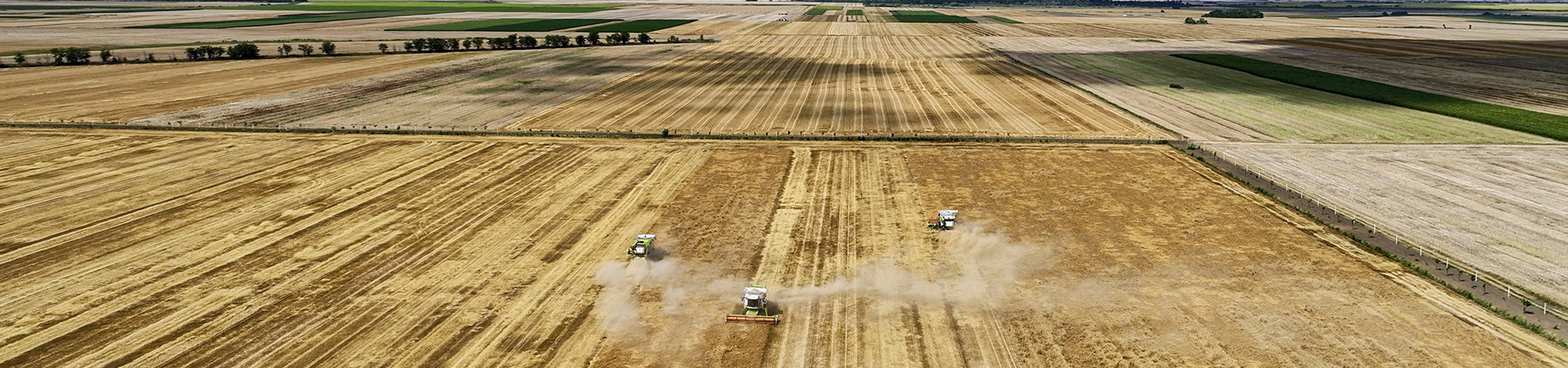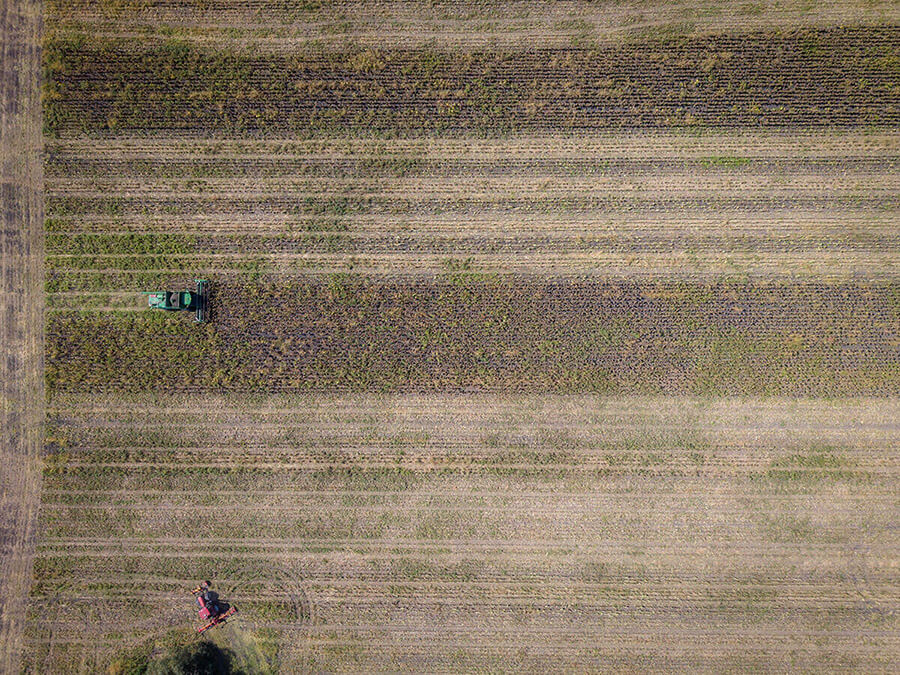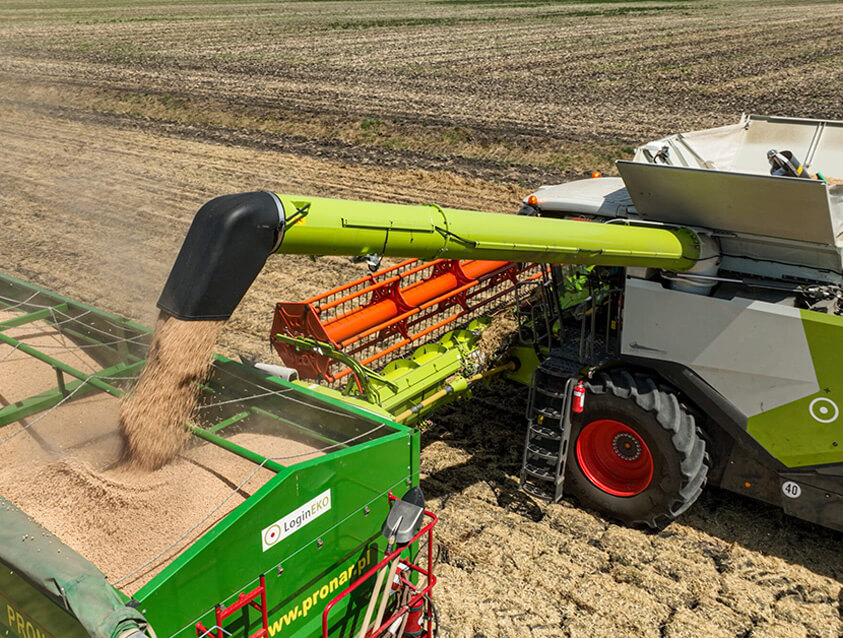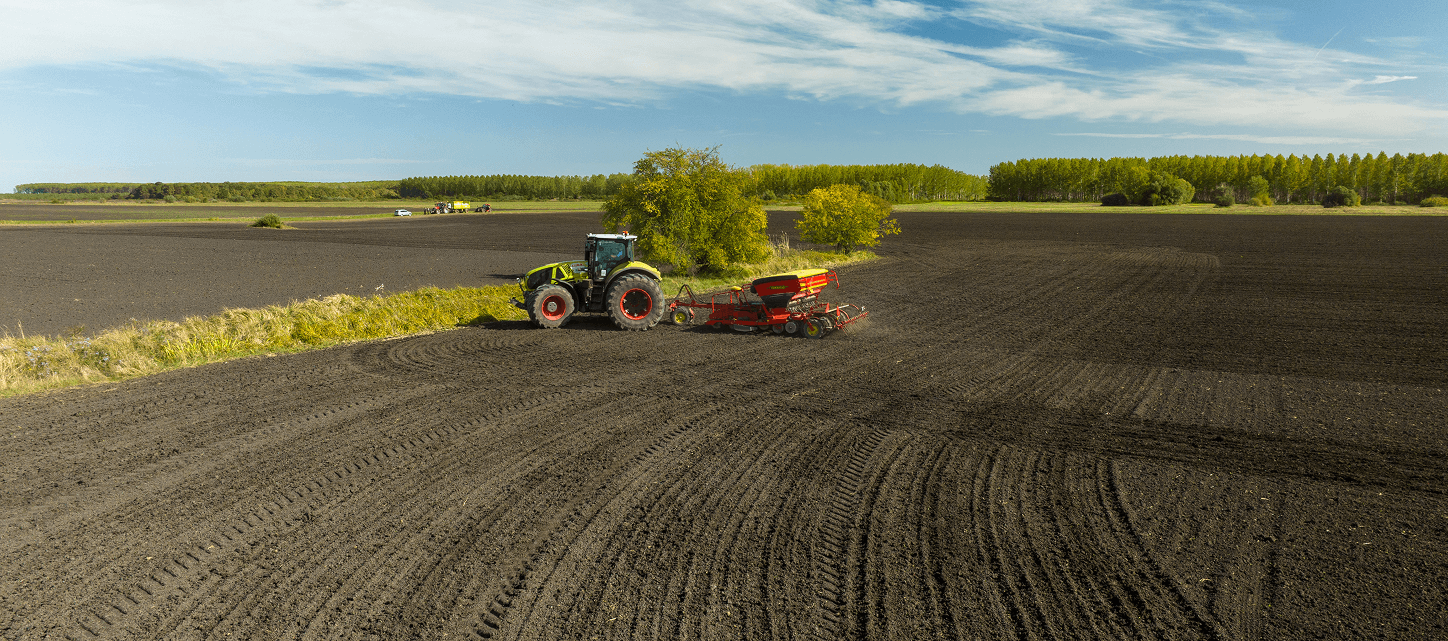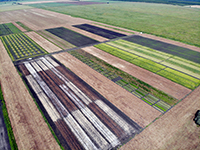


Large-scale organic farming.

Results from 3.250 ha of organically farmed arable land.

Harvest report

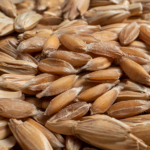
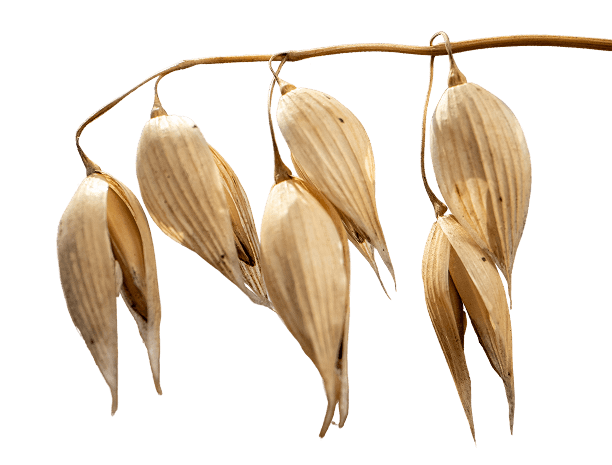
  1. We grew oats on 850 hectares this season, an increase of 195 hectares compared to last year. The natural yield reached 4,3 t/ha, with 0,6% foreign matter.

    For oats, hectoliter mass is the primary quality indicator, showing the density and filling of the grain. Higher hectoliter mass generally means better milling quality and higher market value. Our average was 50 kg/hl, with the highest sample at 53,4 kg/hl.

    Grain size is another key requirement for food-grade oats, especially for flakes production; in 2025, 78% of grains were larger than 2 mm, meeting industry expectations.

    Field operations were minimal. No weed control was needed on any of the 850 hectares. On two smaller plots (32 ha), we applied a treatment against cereal leaf beetle larvae during flowering, using Kumulus, which is permitted in organic production.

    Before sowing, we also applied phosphorus manuring with Euronature on 689 hectares. This input is allowed in organic farming and is essentially a limestone-based product used to support phosphorus availability in the soil.

    • i 4,3 natural yield [t/ha]
    • i 0,6 foreign matter [%]
    • i 50 hectoliter mass [kg/hl]
    • i 78 kernels retained on a 2 mm sieve [%]
    • 0 weed control operations on 850 ha 1 treatment on 7,6 ha

    Explore how we grow oats

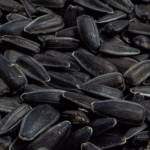
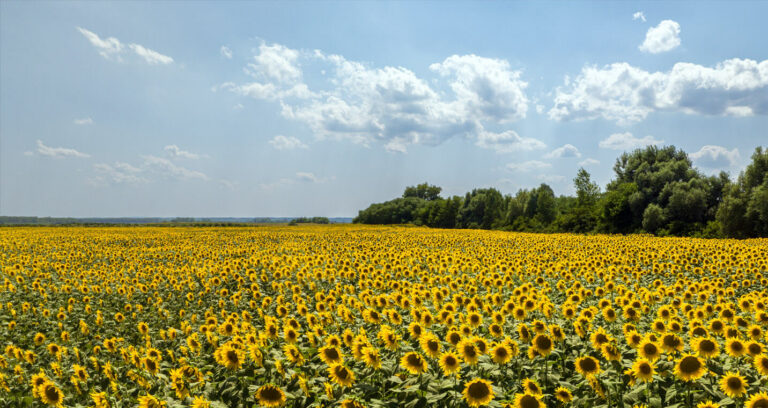
  2. We grew sunflowers on 915 hectares, similar to the previous season. As a nitrogen scavenger, a crop that efficiently takes up the remaining available nitrogen in the soil, sunflower is positioned as the final crop in our 5-year crop rotation.

    This season’s natural yield was 2,1 t/ha, with 5,2% total impurities. Sunflower generally requires more in-season mechanical weed control than cereals; in our case, 2–4 weed control operations were carried out between sowing and harvest.

    • 2,1 natural yield [t/ha]
    • 5,2 total impurities [%]
    • 44,7 fat content [%]
    • 2-4 weed control operations

    Explore how we grow sunflower

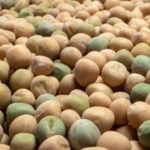
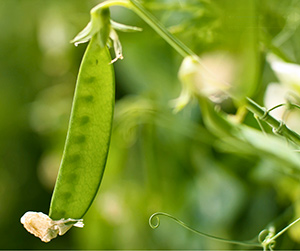
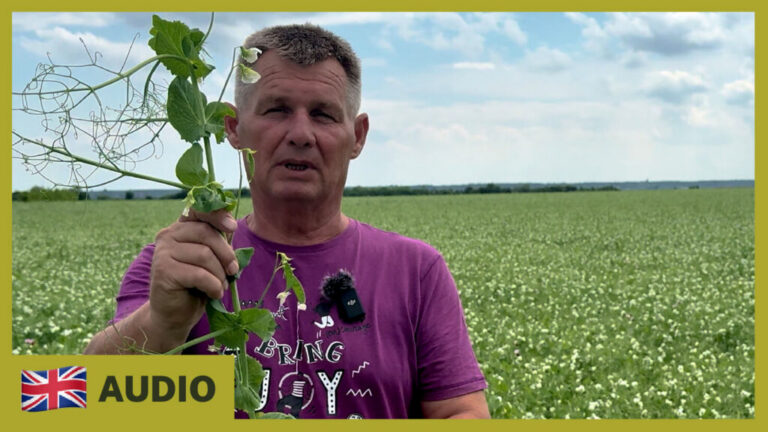
  3. We grew peas on 632 hectares. Peas are the foundation of our crop rotation, because they fix nitrogen and supply it to the subsequent 4 crops in the cycle.

    The natural yield this season was 2,6 t/ha, with 18,6% protein content. Protein levels remain an area for improvement for us, as the food industry typically requires 21–22%, and in some cases up to 25–26%, depending on the buyer.

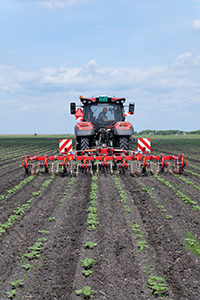
    Field operations were minimal. No interventions were needed on 596 hectares, and on 35 hectares we carried out one mechanical weed-control pass using Top Cut Collect.

    • 2,6 natural yield [t/ha]
    • 2,2 foreign matter [%]
    • 18,6 protein content [%]
    • 0 operations on 596 ha 1 operation on 35 ha

    Explore how we grow peas

  4. We grew wheat on 404,34 hectares, with a significant part of the fields still in conversion or classified as risk zones.

    Newly acquired fields must undergo a 2–3 year conversion period before they can be certified organic, and yields are typically lower during this time as the soil recovers from long-term use of mineral fertilizers and pesticides.

    Some of the fields were also marked as risk zones due to their proximity to conventional neighbours, so we applied a 2-meter buffer strip as a preventive measure and harvested and stored these fields separately.

    Across the certified organic wheat fields (243 ha), the yield was higher, at 5,3 t/ha, with 0,2% foreign matter. Most impurities were small soil particles or stones, while weed seeds were largely eliminated on the field by the Seed Terminators mounted on our combines.

    Protein levels averaged 13,4%, with the highest samples at 13,9%. In order to be able to sell wheat for human consumption, the food industry requires a protein content of 12% or higher.

    These results were achieved without any operations between sowing and harvest.

    • 5,3 natural yield [t/ha]
    • 0,2 foreign matter [%]
    • 13,4 protein content [%]
    • 78,5 hectoliter mass [kg/hl]
    • 0 operations between sowing and harvest

    Explore how we grow wheat *

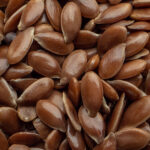
  5. We doubled the flax production this season to 145 hectares, with a natural yield of 1,9 t/ha.

    The crop met quality expectations, with a 44% fat content, which is above the typical industry requirement of 40% or more.

    Field operations were limited. On 110 hectares, no interventions were needed beyond sowing and harvest. On 35 hectares, we performed one mechanical weeding pass using Top Cut Collect to remove taller weeds before flowering.

    * The average 10,2% total impurities were strongly influenced by one field, where impurities reached nearly 50%, mainly due to rye contamination. As a result, this single field significantly increased the overall average. If this field is excluded, impurities across the remaining flax fields averaged 7,28%. After cleaning, the flax was processed to below 1% total impurities.

    • 1,9 natural yield [t/ha]
    • 10,2* total impurities [%]
    • 44 fat content [%]
    • 0 operations on 110 ha 1 operation on 35 ha

    Explore how we grow flax

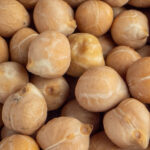
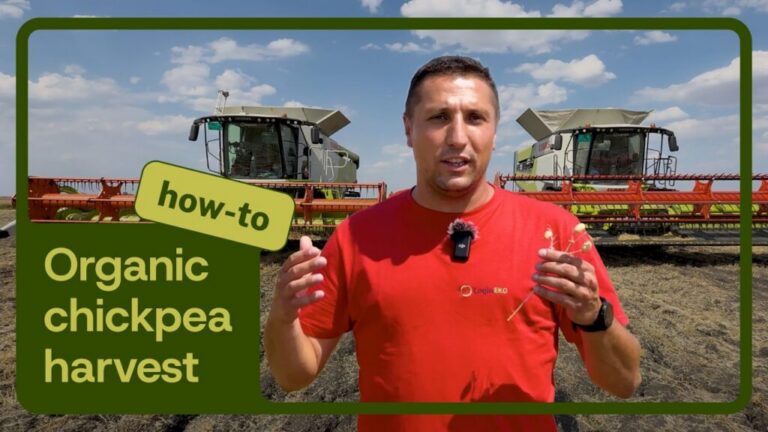
  6. We more than doubled the chickpea production area this season and achieved a natural yield of 1,2 t/ha, with 2,6% foreign matter.

    Chickpea is not a strong weed competitor, so 2–4 mechanical weed control operations were required across the fields. On 133 hectares, we also carried out a permitted treatment against the cotton bollworm.

    • 1,2 natural yield [t/ha]
    • 2,6 foreign matter [%]
    • 100 grain granulation below 9 mm [%]
    • 75 hectoliter mass [kg/hl]
    • 2-4 weed control operations

    Explore how we grow chickpeas

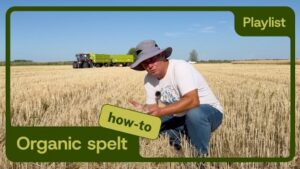
  7. We reduced the area under spelt by half this season and will discontinue it next season.

    The natural yield was 1.9 t/ha, which is lower than last year, mainly due to its position in the rotation. On the other hand, no additional operations were needed between sowing and harvest.

    • 1,9 natural yield [t/ha]
    • 0,9 foreign matter [%]
    • 382 falling number [/s]
    • 43,2 hectoliter mass (unhulled grain) [kg/hl]
    • 72 hectoliter mass (dehulled grain) [kg/hl]
    • 11,6 protein content [%]
    • 0 operations between sowing and harvest

    Explore how we grow spelt

  8. Broad bean 10 2024 16 2024 1,5 2024
  9. Wheat – in conversion & risk zones ⬆︎ 161 2024 18 ⬆︎ 694 2024 71 ⬇︎ 4,3 2024 3.9
  10. Sunflower (confection) 2024 30 2024 78 2024 2,6

*All crops in this table are grown organically. Wheat is shown separately to highlight yield differences between certified organic fields and fields in conversion or risk zones, where the harvest is sold without organic certification.

Our 2025 harvest results: organic yields, grain quality, and field operations.

How we measure yields

In agriculture, yield refers to the amount of a crop harvested per hectare of land. It’s usually expressed in kilograms or tons per hectare (t/ha) and is one of the key indicators farmers use to evaluate a crop’s performance.

Most farmers work with natural yield.
In conventional chemical farming, impurities are often low due to pesticide use. In organic systems, they are generally expected to be higher—but our results show they don’t have to be.

These myths hold organic farming back

Many of the doubts around organic farming come from applying small-scale organic logic to large-scale systems.

What works on a few hectares doesn’t automatically work on a few thousand.

That’s exactly what we want to clarify by sharing our results.

  • “Organic farming can’t scale.”

    This belief comes from imagining large farms working the same way as small ones.

    On small farms, manure is often the backbone of fertility. It works because distances are short and logistics are manageable. At scale, that model breaks down—transporting and applying manure across thousands of hectares simply isn’t cost-effective.

    By sharing results from 3.250 ha, we want to show what large-scale organic, livestock-free farming, powered by free plant-based nitrogen, looks like.

  • “Organic farming is labour-intensive, and weeds make it unmanageable."

    Organic farming is often associated with high labour demand, mainly because of weed control. Our model shows a different picture.

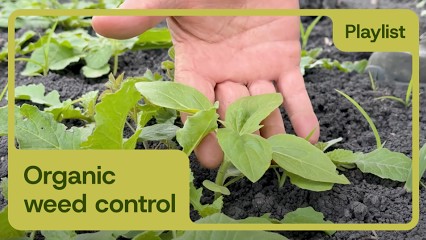
    Across most of our crops, we had no operations between sowing and harvest, while in some, we had a few weed control operations. That’s not because weeds don’t exist, but because our crop rotations are planned to suppress them.

    By sharing both harvest data and the number of operations, we want to show that organic doesn’t have to mean more work.

  • “Only chemical farming can be profitable.”

    Yield alone doesn’t determine success. When growing food for human consumption, market value is shaped by quality parameters, impurities, and certification, while yield also depends on variety choice, climate, and seasonal conditions.

    Our focus is not on chasing maximum tonnage, but achieving the best price per crop.

    By publishing these metrics, along with quality parameters, we aim to give farmers a complete picture, not just the yield number.

HOW WE FARM

Our agroecological context is demanding.

To understand our results, it’s important to understand where and under what conditions we farm.

CLIMATE

Continental climate with four distinct seasons

Average annual rainfall

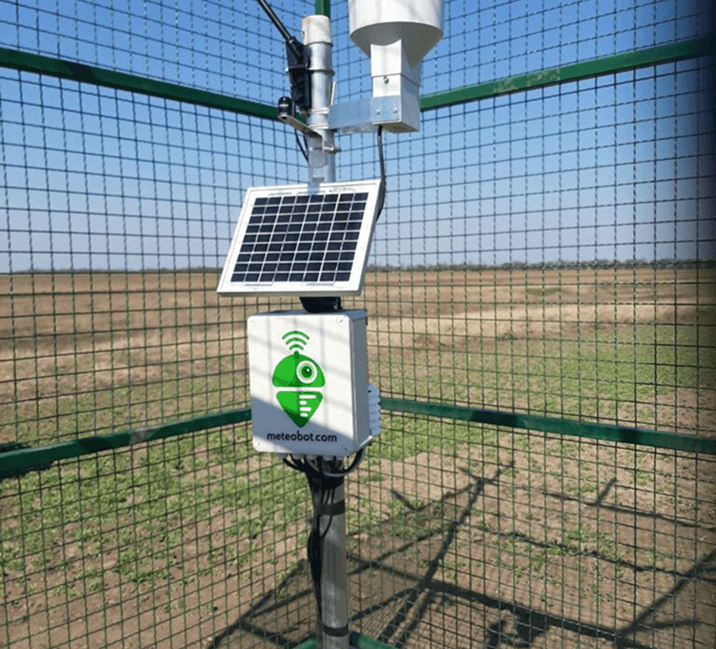
  • 550 mm (long-term average)
  • 431 mm (2021–2025)

Rainfall distribution

  • uneven season distribution with dry summers (long-term average)
  • increasingly unfavorable with summer droughts (2021–2025)

Mean annual air temperature

  • 11 °C (long-term average)
  • 13 °C (2021–2025)

SOIL TYPE

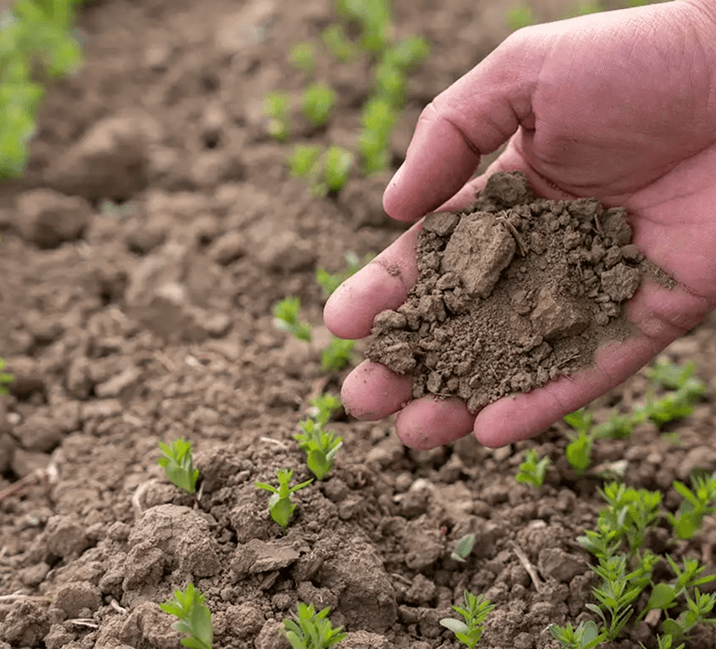
Pellic Vertisol (heavy clay and acidic)

A horizon depth 25–70 cm
Total clay content > 80%
pH 4,5–7,5
Air capacity < 5%
K-Darcy 10⁻⁵
Soil organic matter 4–6%

Our farming model is based on practical solutions developed and tested at scale.

Organic certification sets important requirements. What it doesn’t provide is guidance on how to achieve stable results at scale. That’s what we focus on.
  • Well-planned crop rotations

  • Legume-based nitrogen provision

  • Integrated weed control

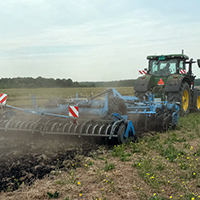
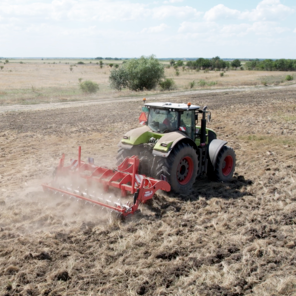
  • Soil conservation tillage

  • Periodic subsoiling to reduce soil bulk density in our heavy clay soil

  • Incorporation of all crop residues

  • High-quality seed production

Organic farming can deliver at scale.

Organic farming is often viewed as difficult to scale or inconsistent in performance, but evidence from our farm shows a different, more promising picture emerging. Every farm’s context is different, but the principles that support our results apply broadly across organic production.

The transition phase matters most. Especially during conversion.

For farmers transitioning from conventional to organic farming, or thinking about it, our results offer a strong case for confidence. The early years can bring uncertainty: yields may decrease during the conversion period, weed pressure often increases, and optimal timing of operations becomes more critical. These challenges are normal across organic systems.

For us, trial and error, strategic adjustments, and continuous learning have been key in helping us move through them. By sharing our knowledge and experience openly, we aim to reduce uncertainty and help others navigate the transition with more clarity and confidence.

Resilience doesn’t come from inputs. It comes from system design.
With careful planning, climate-adequate crops and innovative practices, organic systems can become more stable, more resilient, and yield great results, year after year. By prioritizing soil health, biodiversity, and sustainable farming methods, we are demonstrating that sustainability and productivity can go hand in hand, not just in theory, but in practice.

Knowledge base

View all articles
View all articles

PARTNERSHIPS & MEMBERSHIPS

Change grows faster when we grow together

Subscribe to our newsletter, join us in shaping a brighter and more sustainable future for all!