Careers
 Poslovi

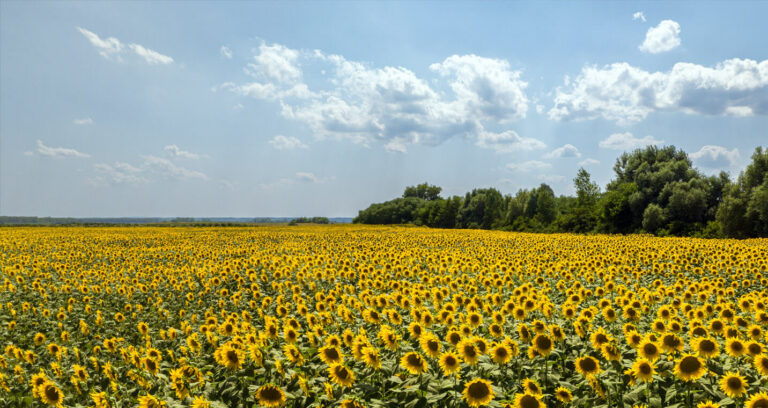
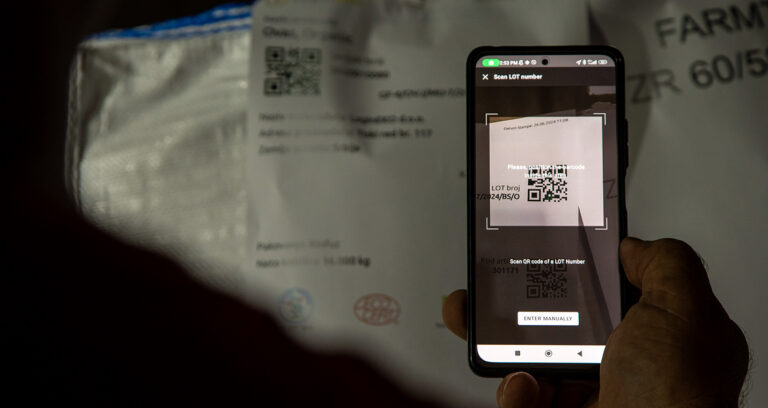
A bottle of Niamito showed how farming, food development and traceability fit together. Through The Origin, our traceability solution, anyone who scans the bottle’s QR code can trace our oats and sunflower back to the fields where we grew them.
How we farm without mineral nitrogen fertiliser or manure
Agronomist Đura Karagić explained our sustainable five-year rotation. Peas come first, then oats or wheat, chickpeas, flax and sunflower. Peas and chickpeas fix atmospheric nitrogen with the help of bacteria in their root nodules. We harvest the grain and return the residues to the soil, where they release nitrogen as they break down.
“I knew it was important, but I didn’t understand quite how powerful it was until we measured its effects here,” Đura said of rotation. It is our main tool for controlling weeds and maintaining soil fertility.
He also explained why the interval between crops matters. Growing peas too often on the same field allows diseases to build up. If a pea crop fails, the whole rotation feels the loss. We lose that year’s harvest and the nitrogen the peas would have fixed for the next four crops.
What goes into a hectare of peas or chickpeas?
A visitor asked about production costs. We shared two examples covering diesel and machine hours in the field from 2025 and 2026 harvests. Growers can apply their own fuel prices and machinery rates.
| Crop and preceding crop | Diesel (L/ha) | Machine time (h/ha) | Clean grain yield (t/ha) |
| Peas (after sunflower) | 41.7 | 1.08 | 2.52 |
| Chickpeas (after cereals) | 79.7 | 3.76 | 1.92 |
We also showed how subsidies differ across the three countries. We receive about €12 per hectare across our 4,413 hectares. For a certified organic farm of the same size and crop mix, we estimated €407 per hectare in Croatia and €652 per hectare in Slovenia under the 2026 schemes. What could your farm receive? Try the calculator with your own hectares and crops
From the crop plan to the field and the warehouse
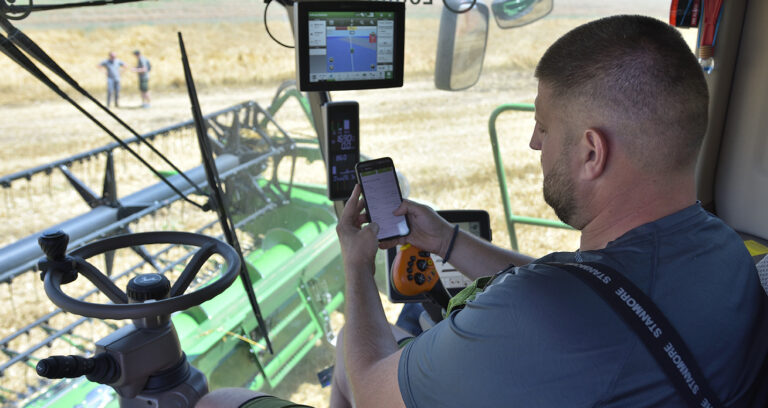
After the farmstead tour, we presented the software we developed on our farm. With Farming Software, you see what is happening on your farm as the work happens, from field to storage to records.
We plan fieldwork, issue work orders and monitor progress and resource use. Harvested lots stay linked to their fields in storage. During processing, we trace each ingredient’s origin and keep that record through to sale.
Slobodan Barački, who heads our northern location, opened the crop plan through 2032, then the to-do list for the coming week. He explained how operators scan the tractor’s QR code, select the assigned implement and see which fields to work. The storekeeper records seed issued and weighs returns to establish actual use.
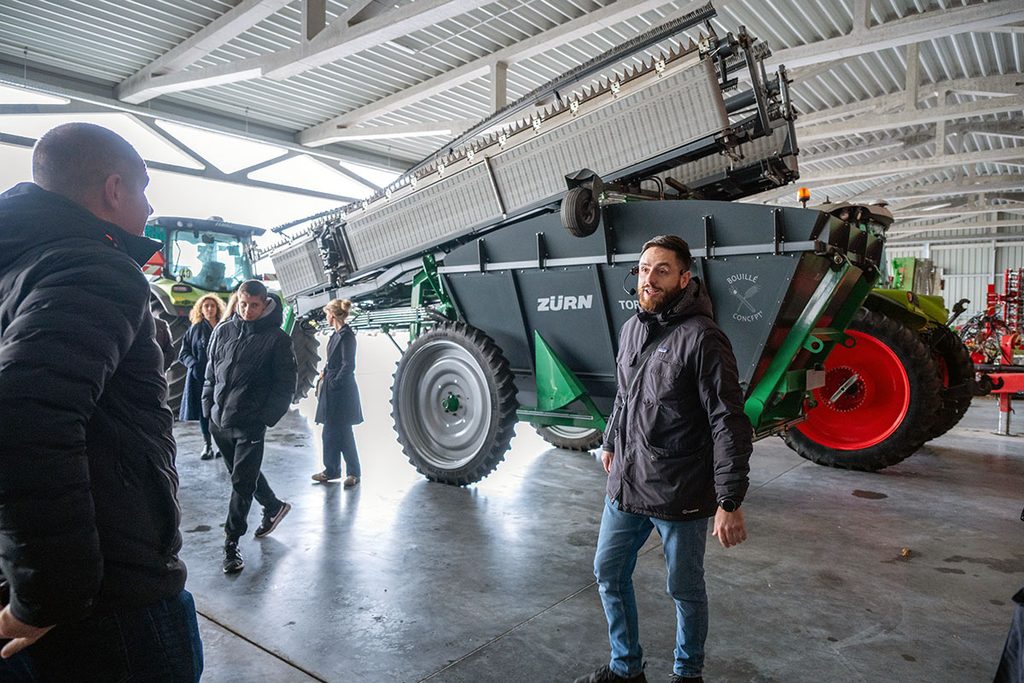
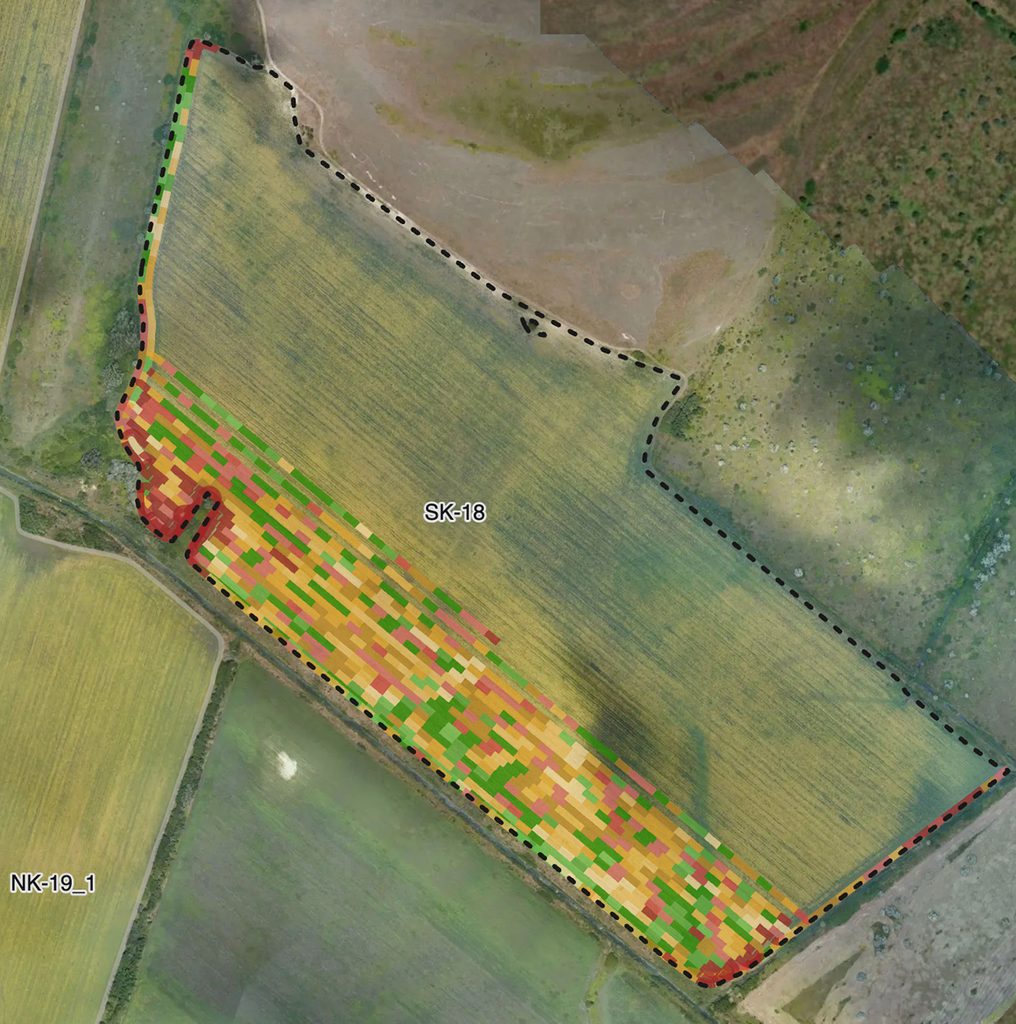
We then moved to the field map to see how we track operations. On SK-18, the axle on our nine-metre roller snapped in hard ground on 29 September, the day after we sowed flax. When the flax emerged, Slobodan could see a difference between the rolled and unrolled areas. The map showed exactly where the roller had stopped.
Samo Login then opened our Farming Software reports. Anyone can compare yields and harvested area by field, crop or season, check diesel use per hectare or see how many hectares a machine covered per hour.
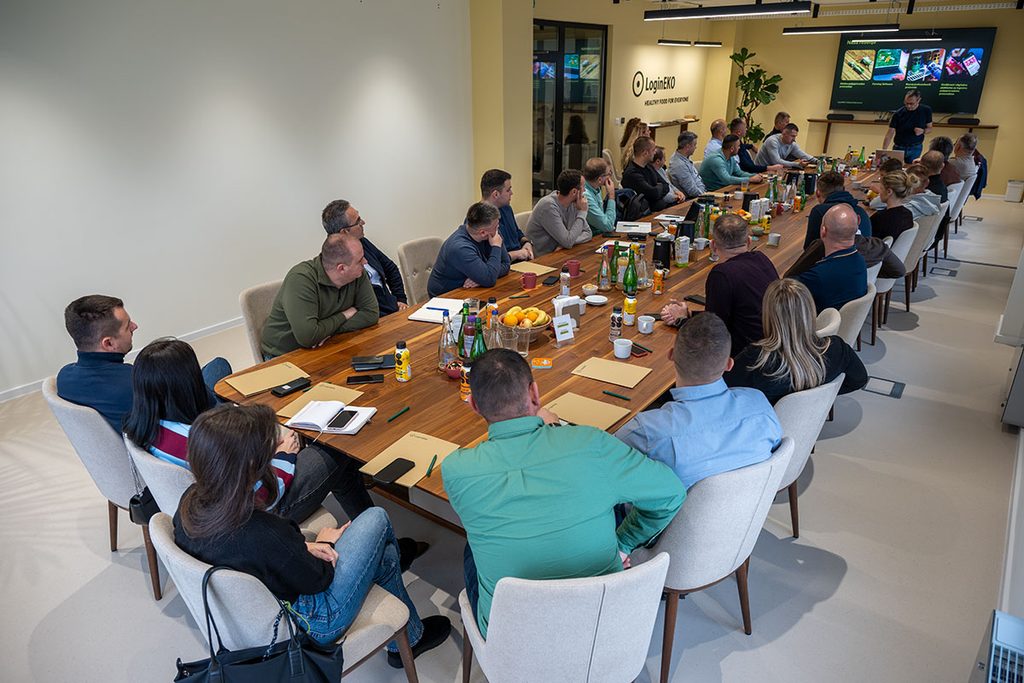
The AI plugin we developed lets us ask questions about farm records in everyday language. We asked which crop used the most diesel per hectare in 2026 and how wheat and oat yields varied by preceding crop. Comparing tillage passes by hand could take half a day in spreadsheets. Slobodan used five years of records to find our average hourly ploughing rate across small and large fields. In minutes, he had a figure for his weekly plan.