 Careers
 Poslovi
How Farm Warehouse Management Supports Traceable Farm Work
A warehouse movement can look simple.
A delivery arrives. Seeds leave storage. Harvested crops are received from the field and unloaded into storage. Unused material comes back from the field. A product is dispatched to a buyer.
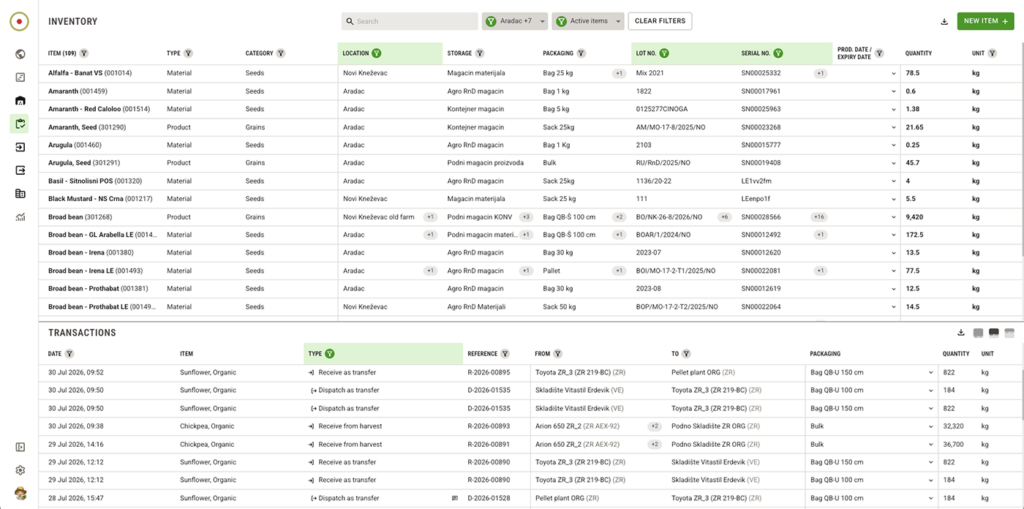
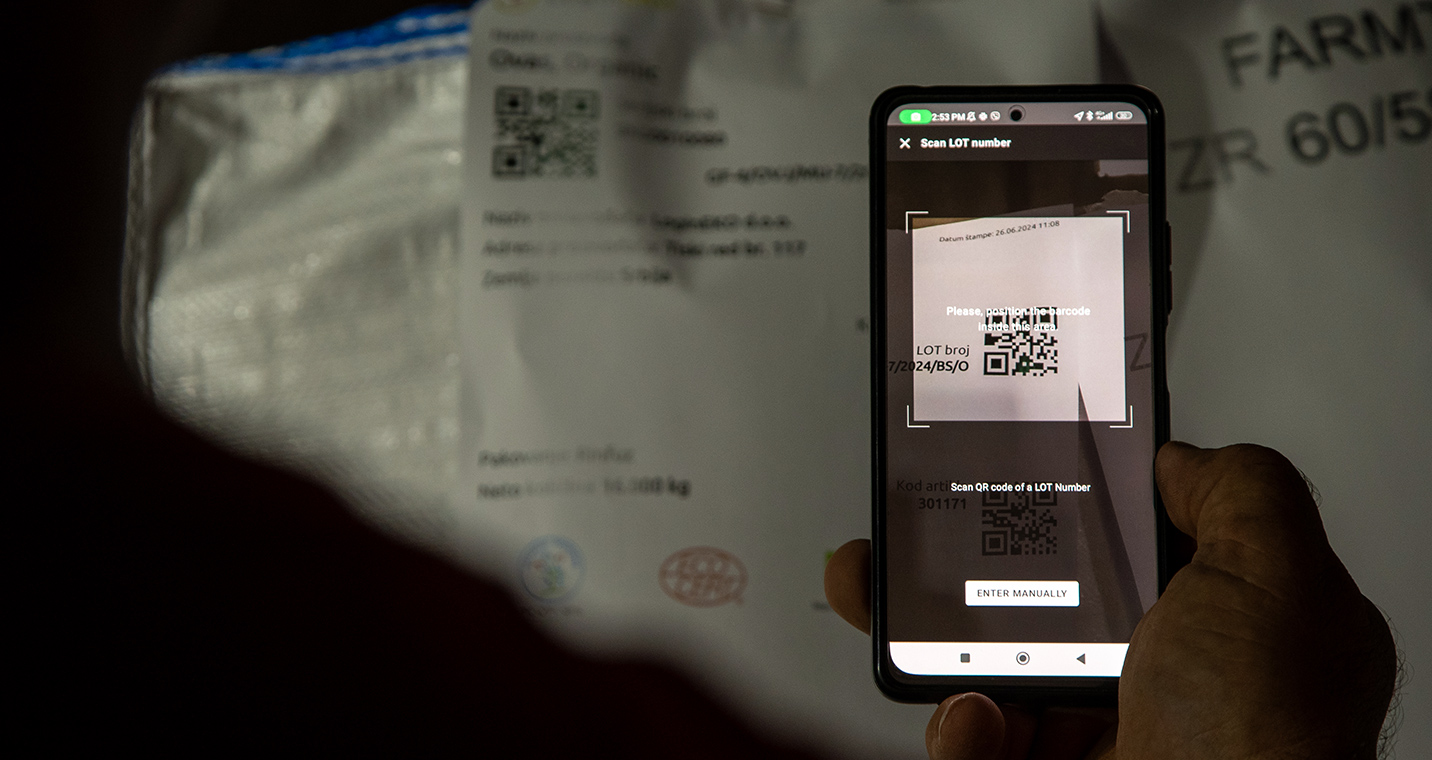
But each movement carries information the farm manager needs later: what moved, how much moved, where it came from, where it went, which LOT or serial number followed it, who confirmed it, and which record proves it happened.
That is where traceability becomes real.
In LoginEKO Farming Software, warehouse work connects physical movements with digital records. Materials, crops, and products are followed as they enter storage, move between locations, go to the field, return unused, or leave the farm for a buyer.
For a large farm, this matters every day. Stock needs to match what is physically available. Field teams need the right materials. Warehouse teams need clear records. Managers need reliable information. Certification and documentation depend on knowing exactly what happened, and when.
Every Warehouse Movement Creates a Record
Warehouse work in our software follows the same logic as real farm work.
When something enters the farm, it is noted as received. This can be a material delivery, a harvested crop coming from the field, unused material returning from an operation, or products potentially returned from a buyer.
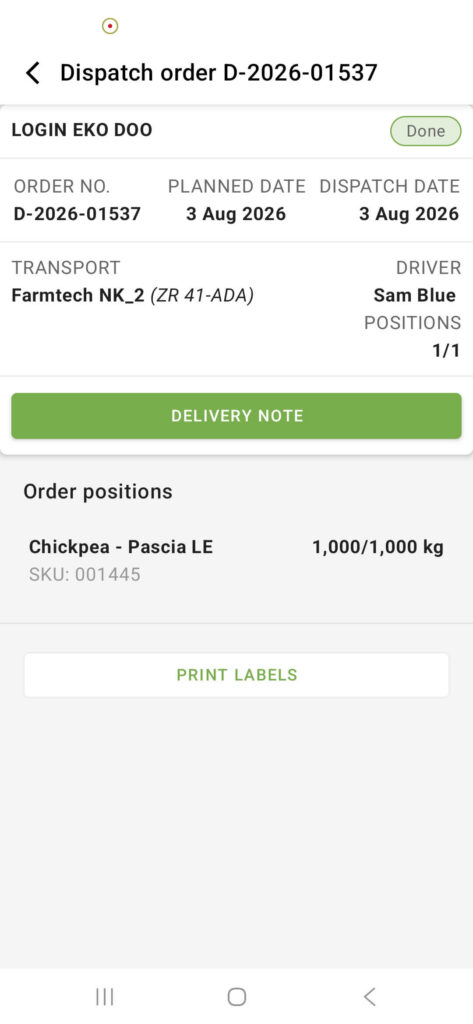
When something leaves storage, it is noted as dispatched. This can be material sent to the field, product sent to a buyer, material returned to a seller, or goods transferred to another warehouse location.
Each movement creates a record. Anyone at the farm can see what was received, dispatched, returned, moved internally, and what is currently available in inventory.
This gives the warehouse more than a list of items; it gives a full history of every movement.
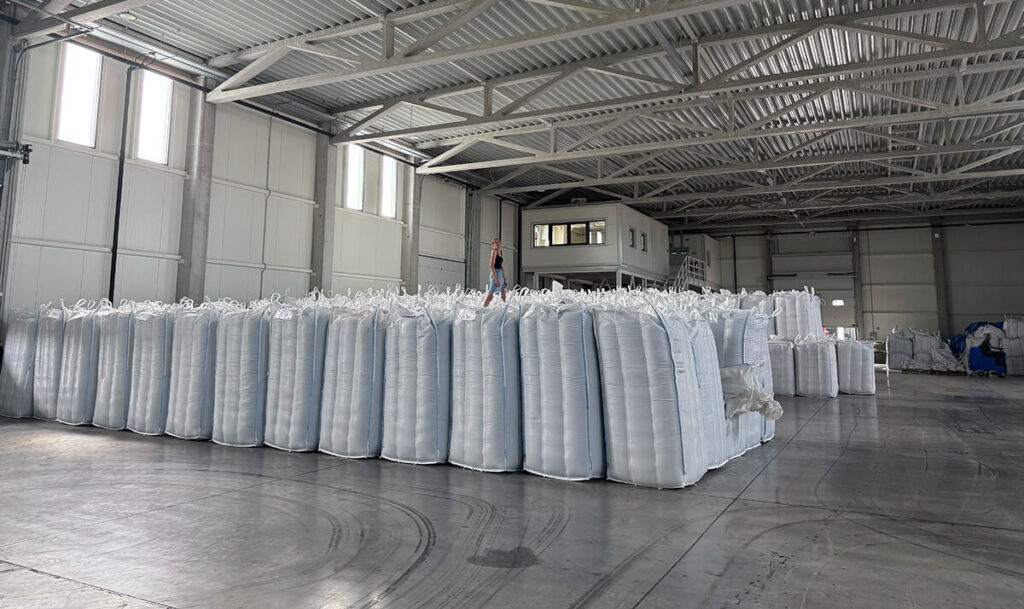
Farm Warehouse Management from Storage to Field and Back
One of the most important warehouse flows happens between storage and the field.
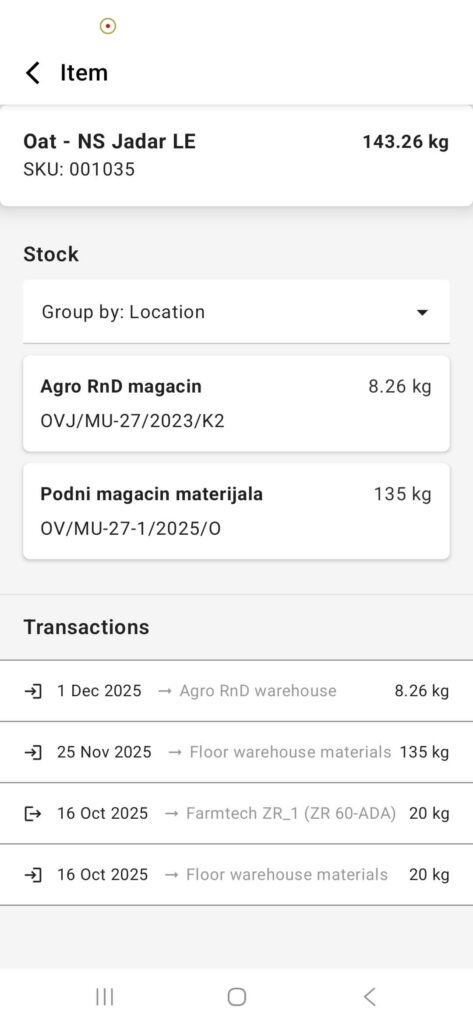
Before a field operation starts, materials such as seeds or organic inputs may need to be dispatched from the warehouse. The dispatch record captures what is being sent, from which warehouse location, in what quantity, and with which tracking details.
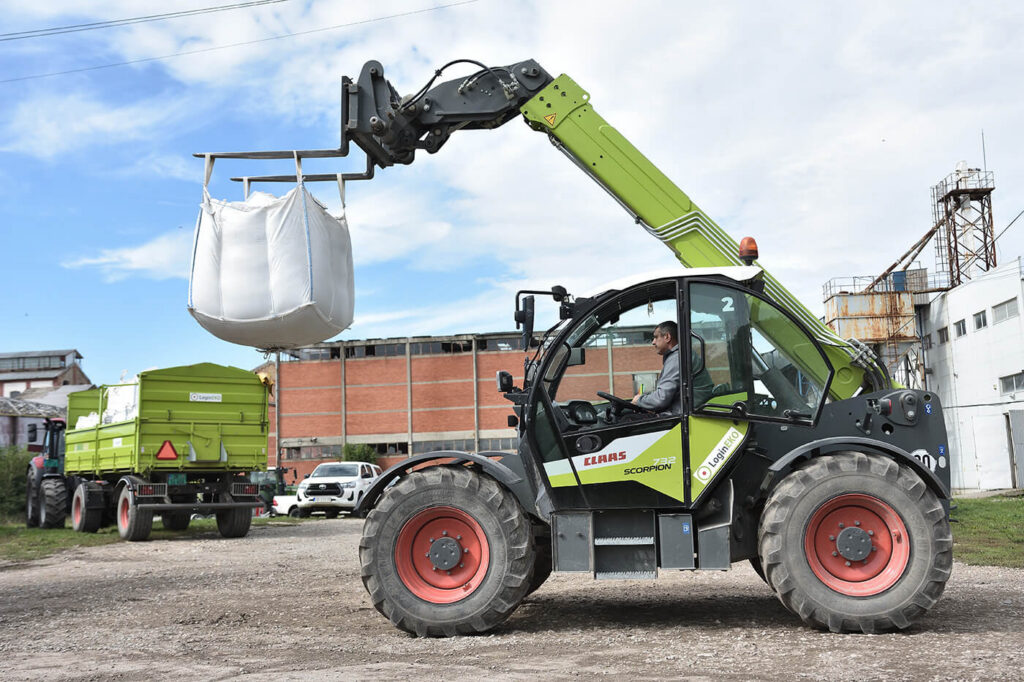
When the material reaches the field, the handover is confirmed. If any material remains unused after the operation, it is returned to the warehouse. The return creates another receive record, so anyone at the farm can follow what was sent, what was used, and what came back. Based on the completed fieldwork, the used quantity can then be automatically distributed across the relevant fields, supporting cost calculation, business analysis, and field performance review.
This is especially important for organic farming, where inputs, LOTs, and records need to stay traceable. The movement does not disappear once material leaves the warehouse. It remains connected to operations and the documentation that follows.
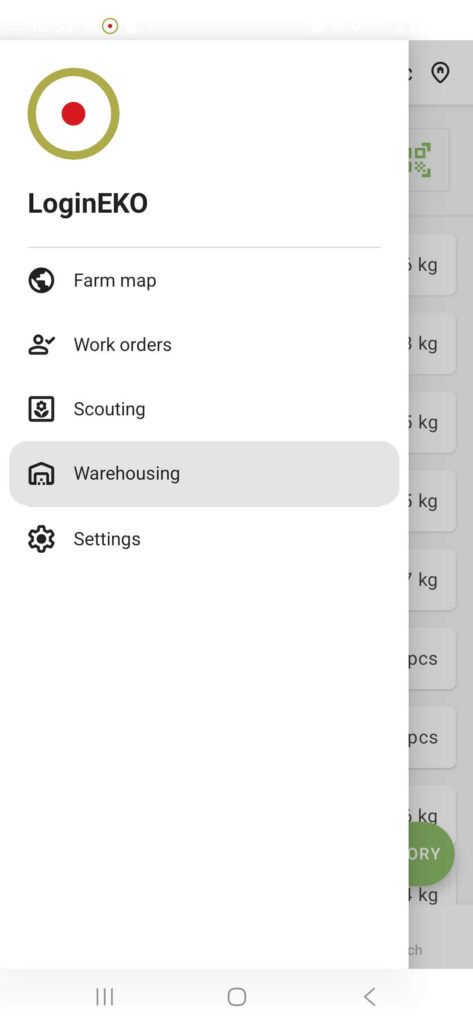
Receiving Harvest into Traceable Inventory
Harvest does not end when crops leave the field.
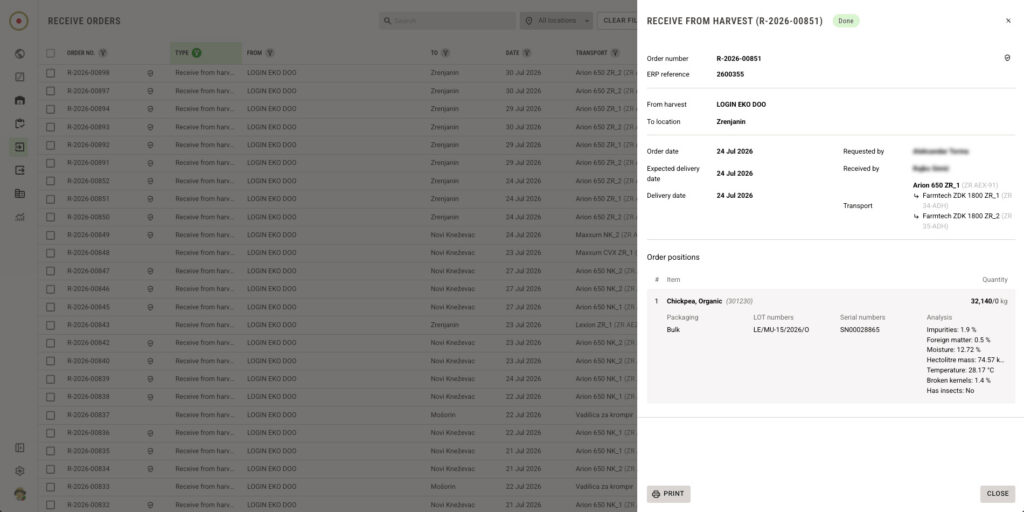
When harvested crops arrive at storage, the warehouse operator receives them into the system. The record includes the crop, quantity, LOT, packaging, storage location, and relevant quality parameters such as moisture, broken kernels, hectolitre mass, protein, and other crop-specific measurements.
This information helps warehouse operators decide which harvested quantities to store or merge, understand what product quality to expect after cleaning, drying, or further processing, and later support dispatches, inventory checks, certification records, and reporting. A harvested product can be stored, processed, transferred, packed, or sent to a buyer, while its history remains connected.
This matters because traceability is built step by step. It is not created only when a delivery note is printed or when a buyer asks for documentation. It begins when seeds and other materials are received from sellers, continues through storage and field operations, and follows the harvested crop through every subsequent warehouse movement.
Tracking the Details behind Farm Inventory
Inventory becomes useful when it reflects actual details.
In our software, warehouse items can be tracked with LOT numbers, serial numbers, production dates, expiry dates, packaging, and storage locations. This helps everybody at the farm know not only how much stock exists, but where it is, how it is stored, and which identifiers follow it.
A LOT number can connect a crop or material to a specific classification, certificate, year, or movement. A serial number can follow a delivery unit or container. A storage location can show where something physically sits inside the warehouse structure.
These details are practical. They help warehouse operators process the right item, agronomists understand what is available for planned work, warehouse managers review stock and movement history, and the records are being kept and ready for traceability, certification, and reporting.
Inventory Becomes a Living Record
Inventory is often treated as a number.
In practice, it is a living record of farm activity.
Every confirmed receive order increases stock. Every confirmed dispatch reduces it. Transfers show movement between warehouse locations. Returns help bring unused or returned goods back into the system. Transaction history records what changed.
That means inventory is not only a snapshot of what is available today. It is also the story of how materials and products moved through the farm.
Traceability starts here, before anyone asks for a report. When a delivery is received, when seed leaves storage, when unused material returns, when harvest enters the warehouse, or when product leaves for a buyer, each confirmed movement adds another part of the story of how materials moved and products were created.
For a farm with many fields, multiple warehouse locations, different operators, seasonal pressure, and certification requirements, LoginEKO Farming Software keeps warehouse, field, and harvest information connected in one operational record. This gives the farmer a clearer view of what happened, where it happened, and how materials and products moved through the system.
That connected history also supports transparency beyond the farm. Through LoginEKO’s free traceability solution, The Origin, warehouse and harvest data recorded in our software can easily be shared as traceable records of where products came from, turning internal farm data into origin information that buyers and other stakeholders can access publicly.
Built from Real Farming Practice
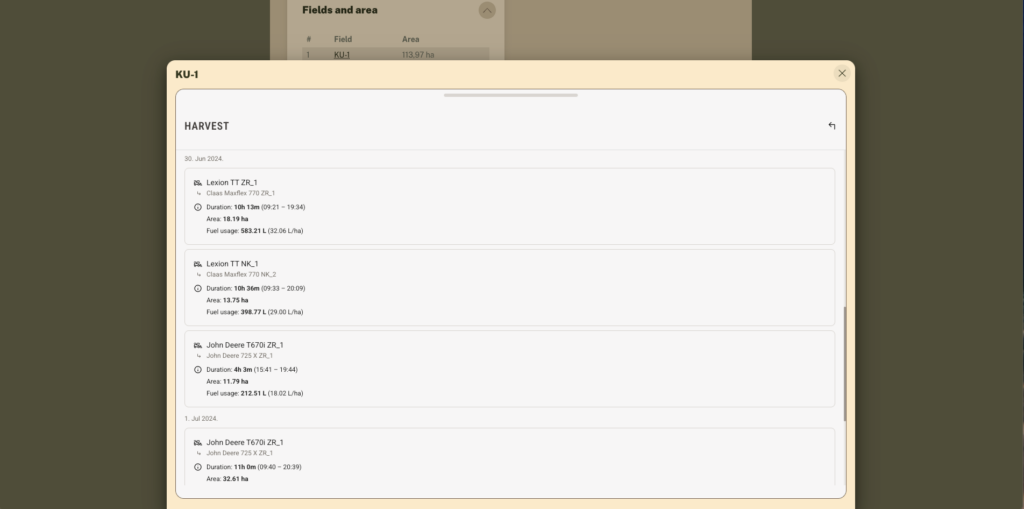
LoginEKO Farming Software was built from the daily reality of our own large-scale organic farming on 3.278 hectares of arable land. Our warehouse management connects directly with field operations, harvest, transport, certification, and reporting. Accurate quality and LOT information, clearly defined storage locations, and recorded returns keep materials, products, and activities connected across the farm.
The Warehouse module handles the actual movement of materials and products through receiving, dispatching, returns, transfers, and inventory management. Each movement becomes part of a connected operational record as the work happens.
Because the traceability of the food that reaches our plates begins before field work starts. It begins with the seeds and materials received and continues through harvest and every movement recorded in the warehouse.