 Careers
 Poslovi

How We Grow Organic Sunflower Without Synthetic Fertilisers or Pesticides
At LoginEKO, the answer is not a single agronomic trick. It starts with understanding the crop, then designing the whole production system around its strengths.
For us, the answer does not lie in a single agronomic measure. It starts with understanding the crop itself and then designing the entire production system around its strengths.
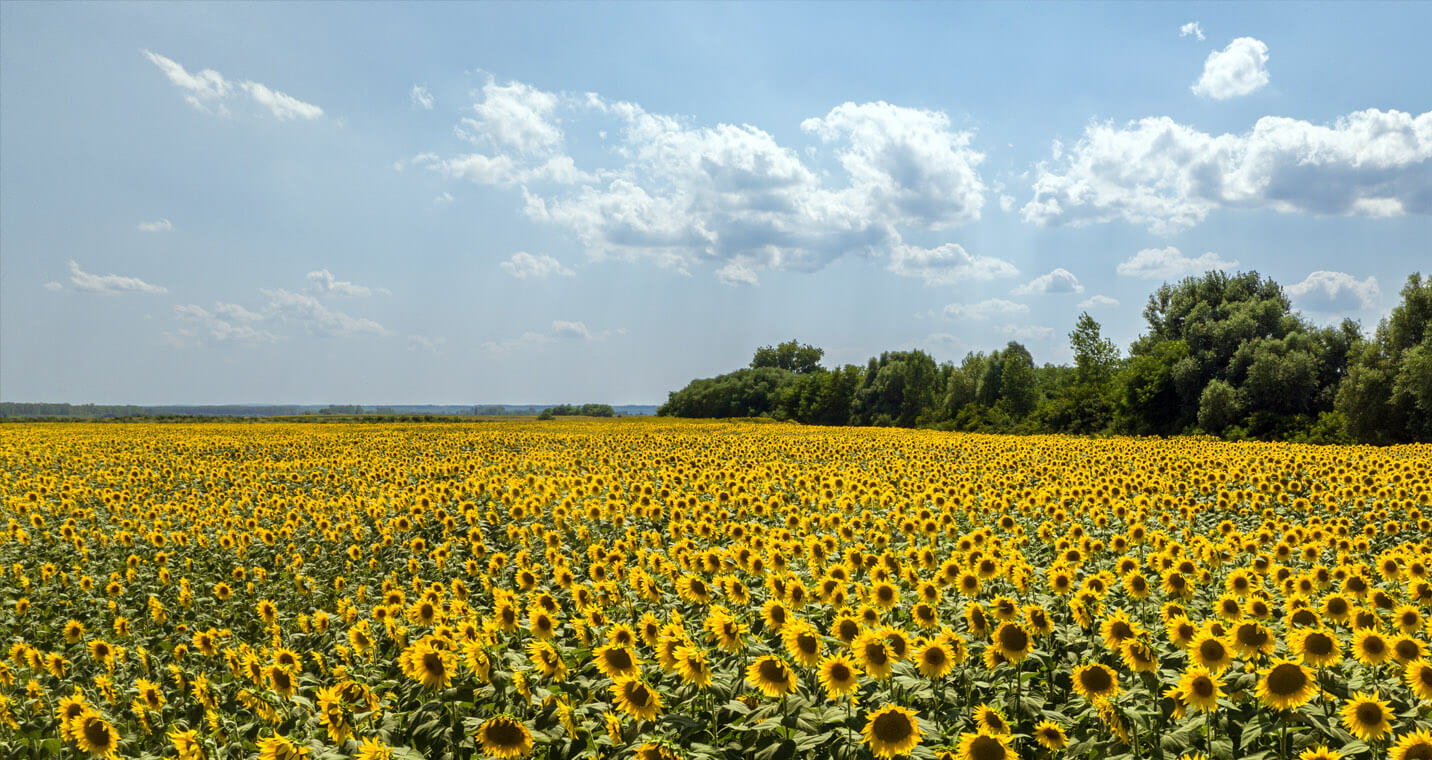
In 2026, we are growing 729 ha of certified organic sunflower across 59 fields in the Novi Kneževac and Zrenjanin areas, all without manure or synthetic mineral fertilisers.
The key is not simply removing inputs. It is creating the conditions for the crop to perform without them.
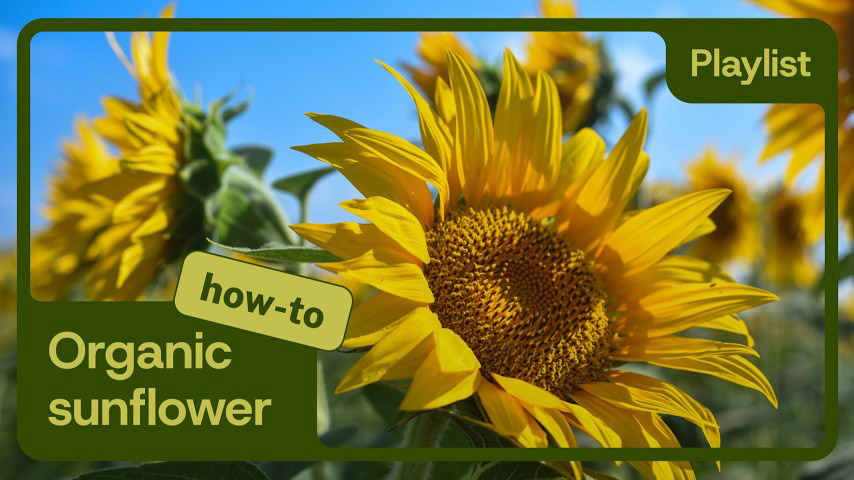
Watch the full how-to series, Organic sunflower, step by step, on our YouTube channel:
Why sunflower works well in our system
Sunflower is particularly well suited to the semi-arid conditions of Banat.
Its deep and extensive root system allows it to explore soil layers that are less accessible to many other field crops. This gives the plant access to both water and nutrients deeper in the soil profile, including nutrients that preceding crops may not have been able to use.
We use this biological advantage deliberately.
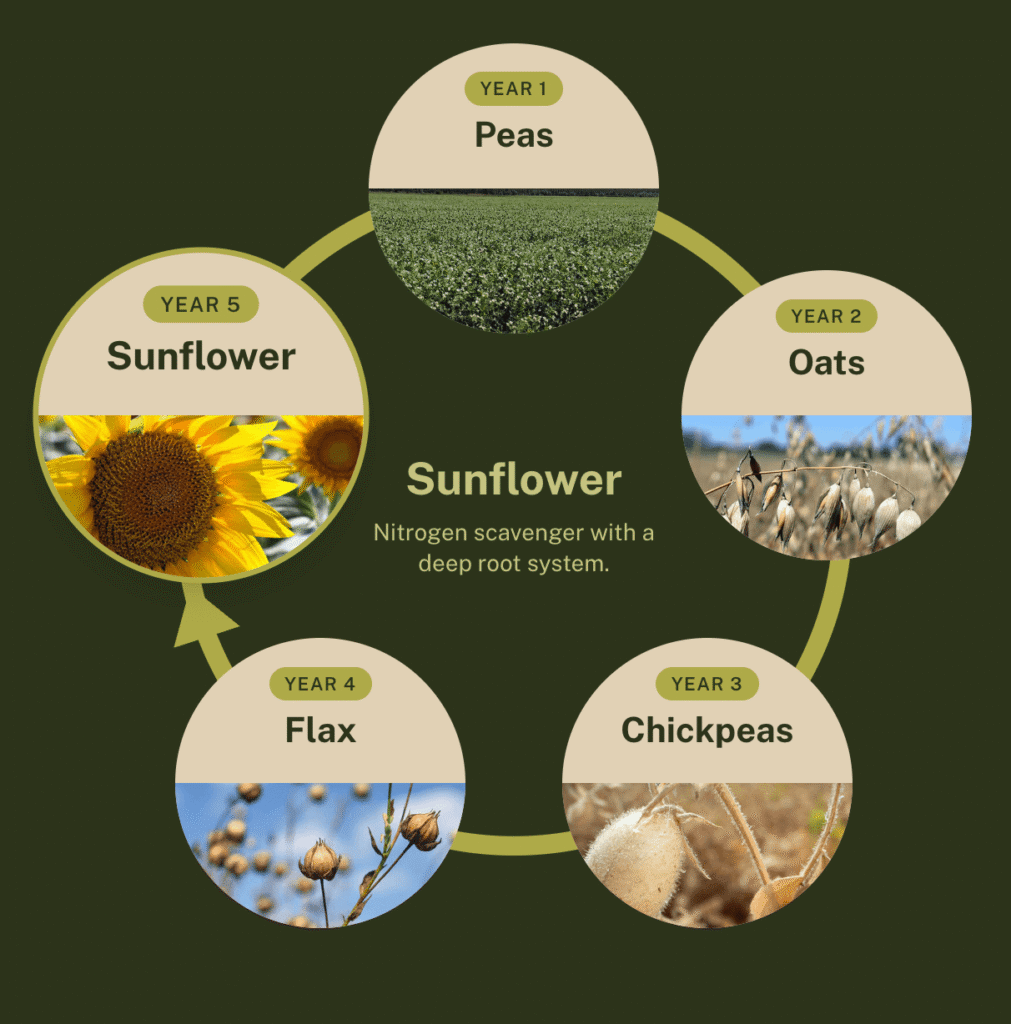
Sunflower comes fifth and last in our five-year crop rotation. By placing it at the end of the sequence, we allow it to make use of nutrients remaining deeper in the soil profile while also benefiting from the effects of the crops grown before it.
Nitrogen is managed through the rotation
Although we do not apply manure or synthetic mineral fertilisers to sunflower, nitrogen management remains essential to the production system.
We include legumes, particularly winter peas and chickpeas, in the rotation. Through biological nitrogen fixation, they contribute to the system’s nitrogen balance and help reduce dependence on external inputs.
We also return all harvest residues to the soil. Only the grain leaves the field; the straw and stalks stay, so each crop leaves organic matter and nutrients behind for the ones that follow.
That is why we don’t look at sunflower as an isolated crop.
Its performance is influenced by decisions made several seasons before it is sown.
The same principle reaches well beyond our own fields. Production that leans on fossil-fuel-based nitrogen is exposed to every price shock and supply disruption in the fertiliser market, while biological nitrogen fixation, farm-saved seeds and well-designed rotations are a working, scalable alternative. We set out that case in full in Food security and the fertiliser shortage.
Uniform emergence gives the crop an early advantage
Once the field is prepared, our focus shifts to crop establishment.
Sowing quality is critical. We pay close attention to sowing date, seed placement, depth, soil moisture, and crop density. The seed needs to be placed uniformly into moist soil, and we sow only when the soil has warmed sufficiently, with a stable temperature of at least 8°C.
The objective is simple: fast and even emergence.
In organic production, this is particularly important. A uniformly established crop develops at a similar pace and competes with weeds much more effectively.
If emergence is uneven, later mechanical operations become more difficult, and the crop loses part of its competitive advantage.
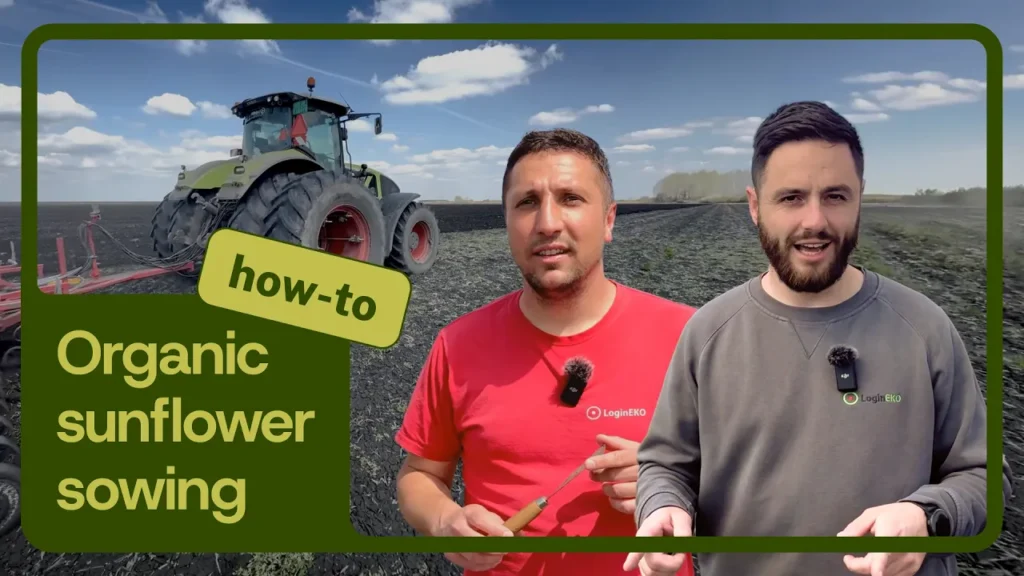
How to Grow Organic Sunflower — Step 1: Seedbed Preparation and Sowing
Mechanical weed control begins before emergence
We time every field operation to the optimal window. Mechanical weed control is no exception: it is most effective when it starts early.
Our first operation takes place after sowing and before sunflower emergence, when we use a spring-tine harrow to control the first flush of weeds. The aim is to target young weeds at the white-thread stage, when they are particularly vulnerable to mechanical disturbance.
This early pass can remove a large proportion of the first weed population before the sunflower emerges.
From approximately the two- to four-leaf stage, we continue with inter-row cultivation. In most situations, two passes are sufficient.
During the first cultivation, we work as close to the crop row as possible while keeping the protective zone narrow. During the second, cultivation can be combined with hilling.
The critical period is approximately the first 40 days after sowing.
If the field is kept clean during this period and sunflower establishes a clear advantage over the weeds, the crop’s subsequent growth and canopy development help suppress later weed emergence.
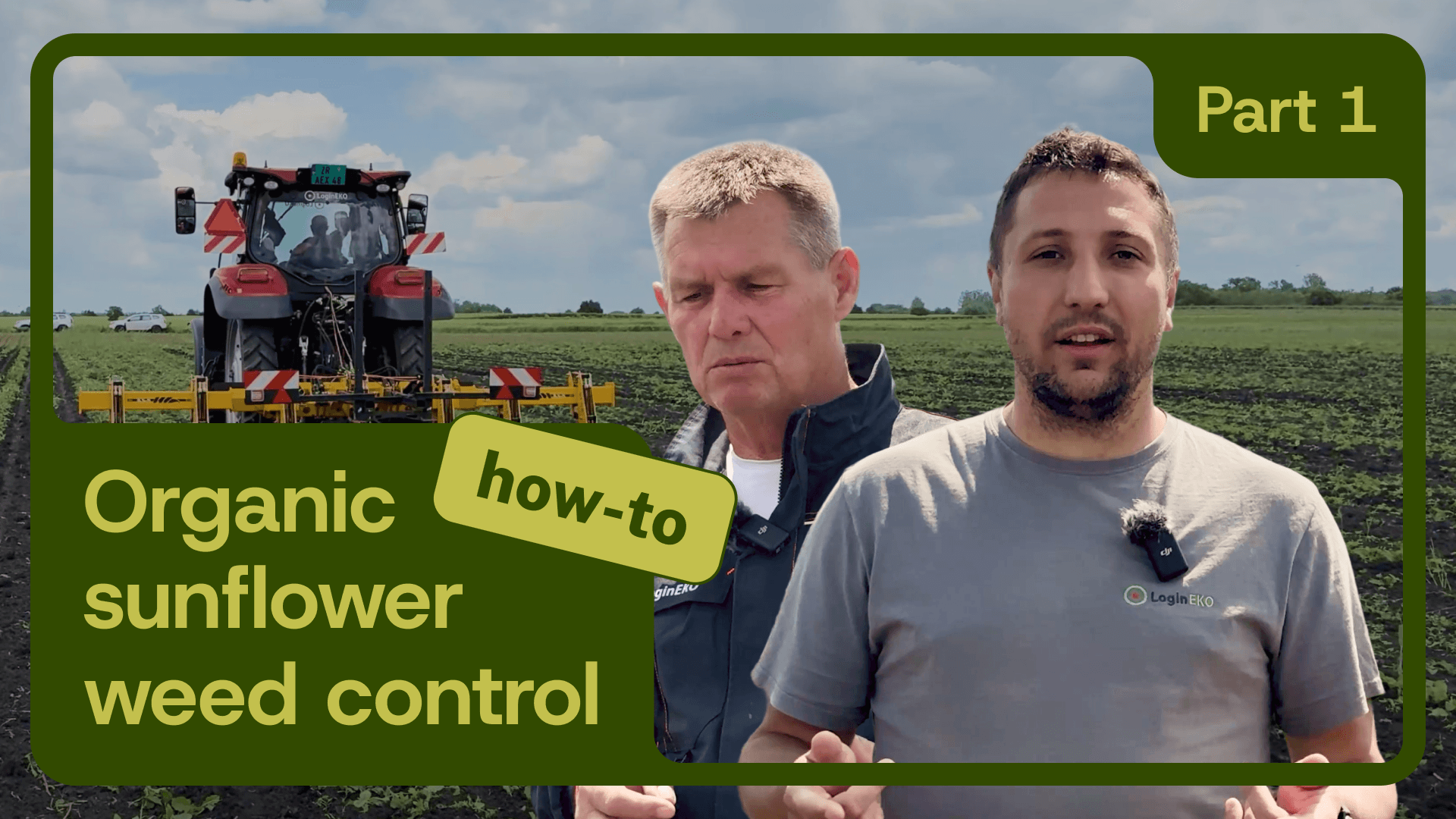
Organic Sunflower Weed Control – Inter-Row Cultivation Timing, Cultivator Setup & Reduced Tillage
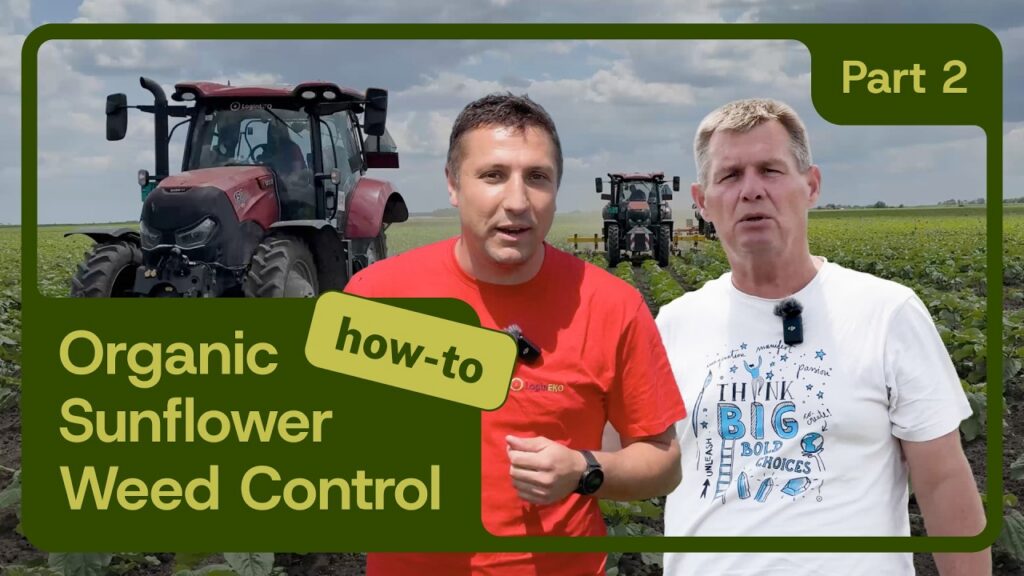
3 Cultivators, 1 Organic Sunflower Field: Who Won the Second Pass?
Sunflower hybrid selection matters
Genetics is another part of the equation.
We test available varieties and hybrids under our own production conditions rather than relying only on general recommendations. The objective is to identify genetics that perform consistently within our soils, climate, rotation, and management system.
For the production described here, we selected the Novi Sad sunflower hybrid NS Kruna.
A good hybrid cannot compensate for poor crop establishment or inadequate weed management, but the right genetics can reinforce an already well-designed production system.
Seven years of organic sunflower without synthetic fertilisers
We have now grown sunflower for seven consecutive years without manure or synthetic mineral fertilisers.
In 2025, the crop achieved an average yield of 2,1 t/ha, around 84% of the conventional average in northern Serbia, where Vojvodina is located (2,5 t/ha in the north and 1,9 t/ha in the south, according to the Statistical Office of the Republic of Serbia). For organic production, that is a strong result.
The 2026 growing season has brought exceptionally severe drought conditions. Even so, the crop has remained promising, and based on its condition ahead of harvest, we expect results that could exceed those of the previous season.
The final yield will provide another important measure of the season. But the broader lesson is already clear.
Successful organic sunflower production is not about replacing one synthetic input with one alternative operation. It is about combining crop rotation, biological nitrogen fixation, soil management, precise crop establishment, timely mechanical weed control, and appropriate genetics.
When these elements work together, sunflower can use its natural advantages efficiently, even under demanding production conditions.
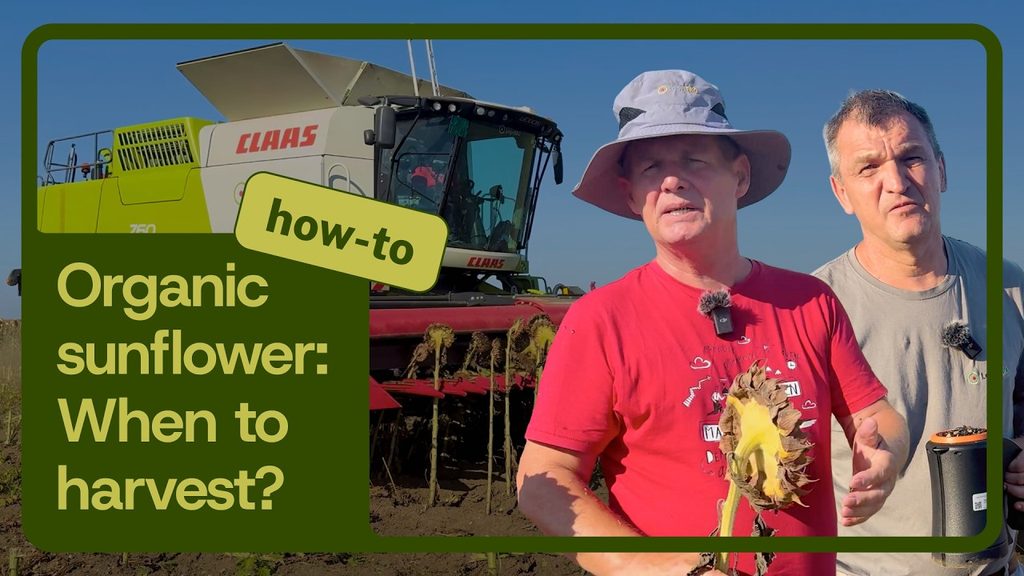
How We Know When Sunflower Is Ready to Harvest
Our 2025 Harvest Results – Organic Yields, Grain Quality & Field Operations
From Harvest to Premium Market
Frequently Asked Questions
Can sunflower be grown without fertiliser?
Yes. At LoginEKO, we have grown sunflower for seven consecutive years without manure or synthetic mineral fertilisers. The crop is not fed directly. Instead, the whole rotation is built to supply what it needs: sunflower sits fifth and last in our five-year rotation, where its deep roots reach water and nutrients left deeper in the soil profile, and the legumes grown before it fix nitrogen biologically.
How much nitrogen does sunflower need in an organic rotation?
Less than most people assume. Sunflower has a modest nitrogen demand and draws on reserves deep in the soil profile that other crops leave behind. In our system, we apply no nitrogen to the sunflower crop at all. Nitrogen is managed across the whole rotation: legumes such as winter peas and chickpeas fix it biologically and build the balance that later crops, including sunflower, draw on.
When should organic sunflower be sown?
Exact dates depend on the season’s temperatures and soil conditions, but we always aim for the optimal sowing window. In 2026, we sowed our organic sunflower between 7 and 26 April.
How many cultivation passes does organic sunflower need?
Sow only once the soil has warmed to a stable temperature of at least 8°C. Warm, moist soil gives the fast, even emergence that matters most in organic production, because a uniformly established crop competes with weeds far more effectively. We place the seed uniformly into moist soil and pay close attention to sowing date, depth, and crop density. In most seasons, one pass before emergence and two inter-row cultivations. We start after sowing and before emergence with a spring-tine harrow to remove the first flush of weeds at the white-thread stage, then move to inter-row cultivation from roughly the two- to four-leaf stage. The first 40 days after sowing are decisive: keep the field clean through that window and the crop’s own canopy suppresses later weeds.
What yield can organic sunflower achieve without fertiliser?
In 2025, our organic sunflower averaged 2,1 t/ha, around 84% of the conventional average in northern Serbia, where Vojvodina is located (2,5 t/ha in the north and 1,9 t/ha in the south, according to the Statistical Office of the Republic of Serbia). Results move with the season: 2026 brought an exceptionally severe drought, yet the crop stayed promising going into harvest.
Which sunflower hybrid works in organic production?
There is no single answer. We test available varieties and hybrids under our own soils, climate, and rotation rather than relying on general recommendations. For the production described here, we chose the Novi Sad hybrid NS Kruna. The right genetics reinforce a well-designed system, but no hybrid can compensate for poor establishment or weak weed control.