 Careers
 Poslovi
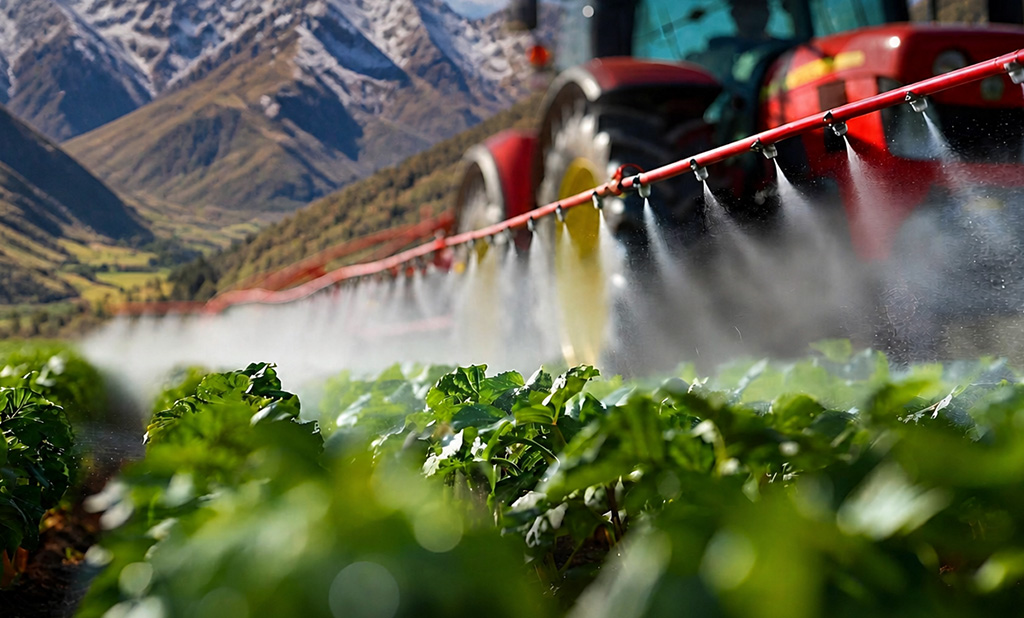
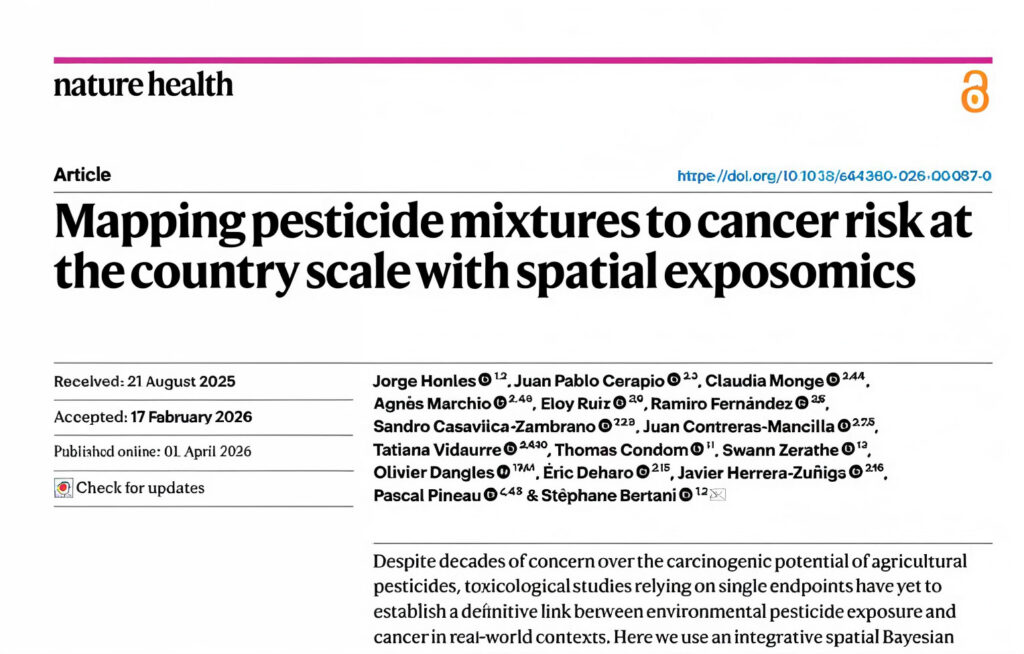
Can long-term environmental exposure to pesticide mixtures contribute to cancer risk? It is a question that has never had a clean answer. Traditional toxicology often tests one chemical at a time, at a defined dose and frequently in animal models. Real life does not work like that. We are exposed to changing cocktails of many chemicals, at different strengths, year after year. A study published in Nature Health on 1 April 2026 tackles that mismatch head-on.
Do pesticides cause cancer? What the study found
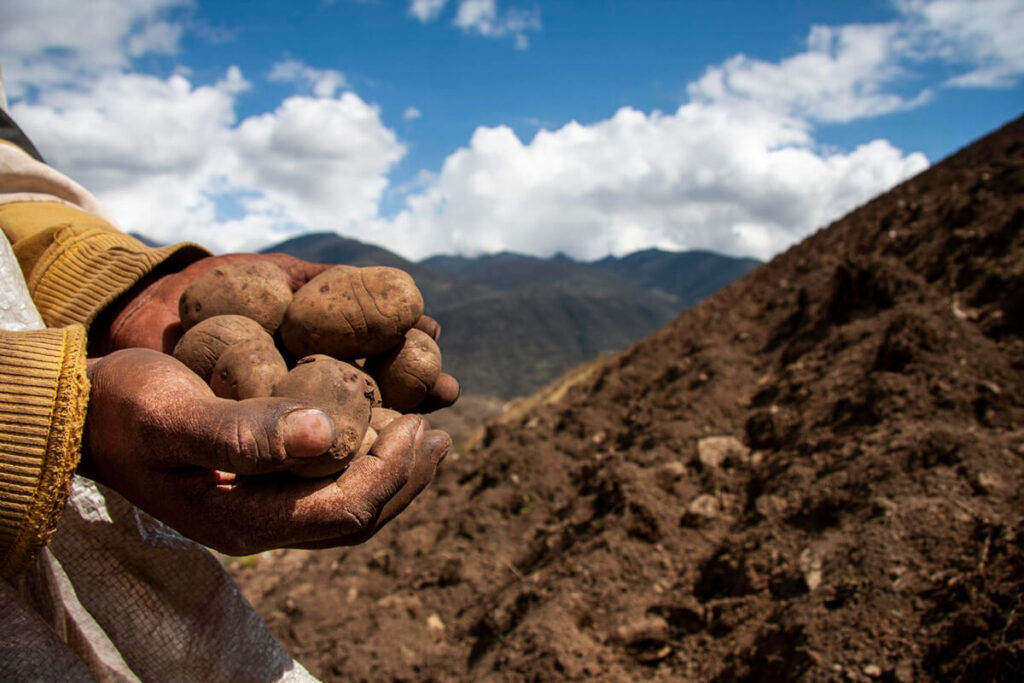
Researchers from the IRD (France’s National Research Institute for Sustainable Development), the Institut Pasteur, the University of Toulouse, Peru’s National Institute of Neoplastic Diseases and other institutions used Peru as the setting for a country-wide, observational environmental and epidemiological analysis. Peru was a relevant choice because of its diverse geography, varying agricultural practices and pesticide use, documented environmental contamination, and pronounced socio-ethnic inequalities in cancer incidence and exposure.
The core geospatial analysis had two parts. First, the team modelled the environmental transport, degradation, and dispersal of 31 commonly used pesticide active ingredients over six years, from 2014 to 2019, producing a risk map at a resolution of 100 × 100 metres. They then compared this modelled exposure-risk surface with records of 158.072 primary cancer cases registered by Peru’s National Institute of Neoplastic Diseases between 2007 and 2020. Worth noting: none of the 31 active ingredients was classified by the International Agency for Research on Cancer as Group 1, ‘carcinogenic to humans’, and none was classified in the WHO’s most hazardous pesticide category. That is not the same as being proven safe. One of them, monocrotophos, had been banned in Peru since 2004, while the rest were authorised during the modelled period.
The overlap was hard to ignore. Across the 436 identified hotspots, the model estimated a mean relative cancer risk of 2,52, roughly 152% above the reference level, though the estimate varied widely from one hotspot to another (from 1,14 to 9,38). These are population-level spatial estimates, not predictions of any individual’s chance of developing cancer. The contamination was not confined to the fields. The model estimated that off-site pesticide contamination could extend 30 to 50 km beyond cultivated land, affecting roughly 1.600 km², with the highest modelled environmental pesticide-exposure risk in the Andean highlands and slopes, particularly along the western flank and southern coast, where limited rainfall was associated with greater pesticide accumulation. Several of these hotspots overlapped Andean and Amazonian Indigenous and peasant territories, where socio-economic inequalities and land-use pressures may compound exposure risk.
How pesticide exposure is linked to liver cancer
A correlation on a map is only half a story, so the team looked for a biological reason. They turned to the liver, the body’s main chemical-processing organ and a sentinel site for environmental exposure. Here the analysis was narrow and specific: paired tumour and non-tumour liver tissue from 36 non-cirrhotic patients with hepatocellular carcinoma who lived in pesticide-associated hotspots. In that tissue, they found a gene-expression signature consistent primarily with non-genotoxic carcinogenic processes, meaning mechanisms that may promote cancer without directly causing DNA mutations, though the authors note that pesticide mixtures may also produce modest genotoxic effects. The signature pointed to disruption of the regulatory circuits that keep liver cells stable and maintain their identity, and it was strongest in the non-tumour tissue of people who already had liver cancer. The authors interpret this as consistent with molecular disruption preceding malignant transformation, rather than as proof, because the study did not track individuals over time.

So what does this actually prove, and what does it not? It combines a country-wide spatial association with supporting molecular evidence from human liver tissue, which substantially strengthens the biological plausibility of the findings. It does not prove that a particular pesticide caused a particular person’s cancer. Individual pesticide exposures for the cancer cases were not measured directly but inferred from population-level spatial indicators, and residual environmental, socio-economic or lifestyle factors cannot be completely ruled out. Establishing direct causal links will take further individual-level and longitudinal research, and the researchers say so plainly.
The more challenging point concerns how we judge safety in the first place. Conventional toxicological assessments often examine pesticide active ingredients individually. Real-world exposure, however, involves mixtures of active ingredients and their degradation products, with potentially interactive and non-linear effects that may not be captured by assessments of individual substances alone. This study does not settle that: it did not measure whether people’s exposures sat below regulatory thresholds, nor show that a particular threshold had failed. Context matters too, even weather. In a preliminary climate-sensitivity analysis, the model predicted markedly higher exposure risk during the 2015 El Niño episode than under neutral conditions in 2019, which the authors suggest could reflect changes in both pesticide use and environmental transport. The findings point to the need for pesticide risk assessment and policy to better account for real-world mixtures, population vulnerability, and socio-ecological inequalities. The authors also call for individual-level exposure assessment and longitudinal research to strengthen causal inference.
Farming without synthetic pesticides
This is not an abstract debate for us. We grow food without synthetic pesticides, so findings like these sit close to the work. We manage 3.278 hectares of certified organic arable land in Vojvodina, Serbia, alongside roughly 490 hectares of biodiversity areas, and “no synthetic pesticides” is one of the rules we do not break. A common misconception is that organic farming lets weeds take over. We are proving otherwise, and at large scale.
Most of the work is done by crop rotation, before anything mechanical happens. Rotating cereals, legumes and oil crops keeps weeds (and pests) in check. Where that is not enough, we add mechanical weed control and run Seed Terminators on most of the combines to destroy weed seeds during harvest. The biodiversity zones of trees, meadows and buffer strips play their part too, providing habitat for birds, pollinators and other wildlife.
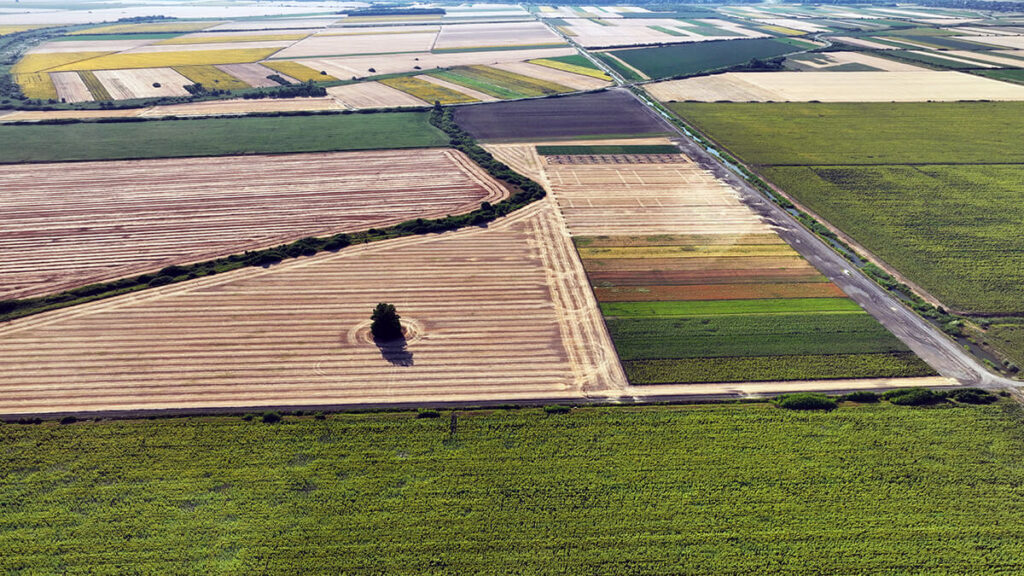
The study suggests that the amount of synthetic pesticide in a landscape is as much a public health question as a farming one, and that systems built to avoid synthetic pesticides at scale deserve serious attention rather than a shrug. Building that system, proving it works across thousands of hectares and sharing it freely, is the whole reason LoginEKO exists.
Reference
Honles, J., Cerapio, J. P., Monge, C., Marchio, A., Ruiz, E., Fernández, R., Casavilca-Zambrano, S., Contreras-Mancilla, J., Vidaurre, T., Condom, T., Zerathe, S., Dangles, O., Deharo, E., Herrera-Zuñiga, J., Pineau, P., & Bertani, S. (2026). Mapping pesticide mixtures to cancer risk at the country scale with spatial exposomics. Nature Health. https://doi.org/10.1038/s44360-026-00087-0