 Careers
 Poslovi
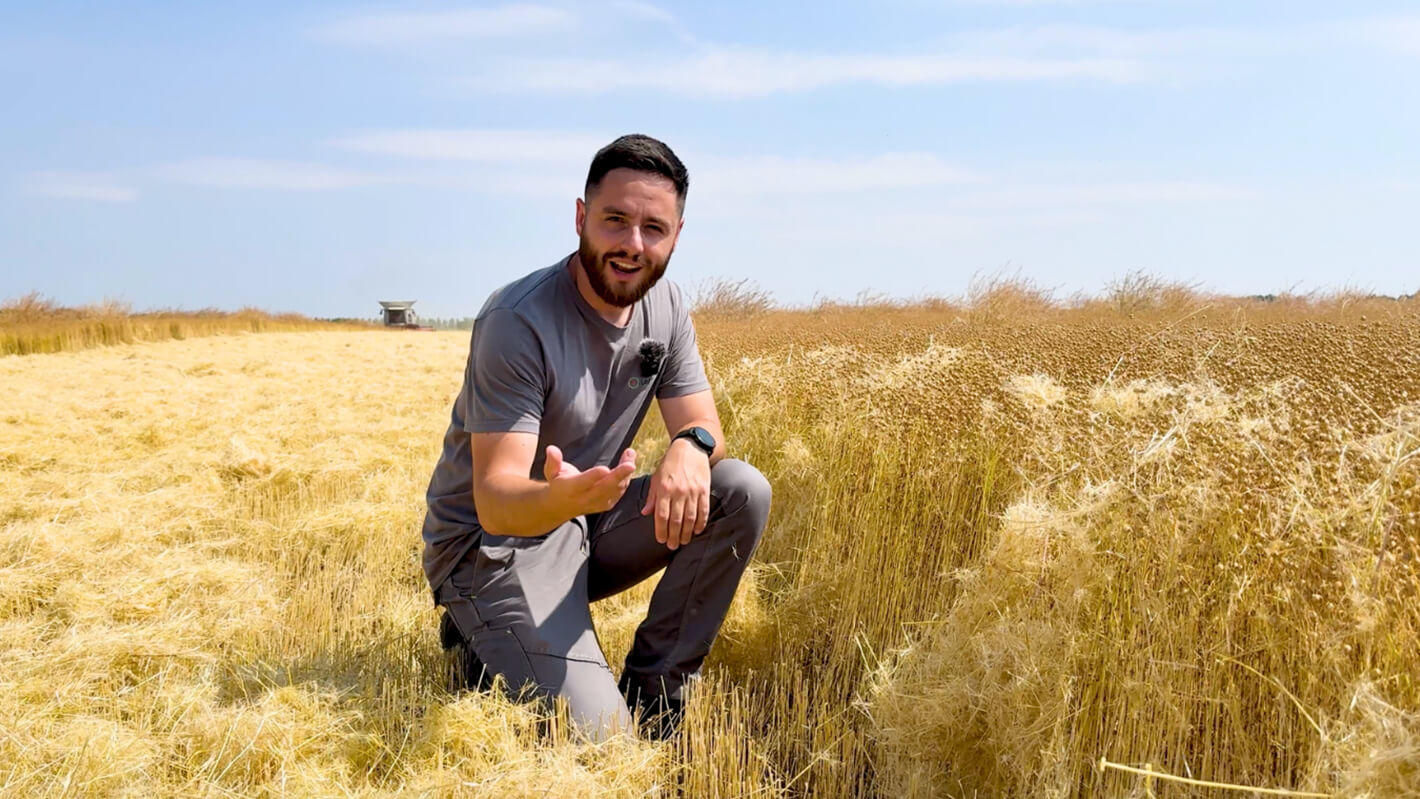
Flax harvest is one of the trickiest operations on our organic farm. With its strong fibers and delicate seeds, every step has to be carefully planned. In this article, we’ll take you behind the scenes of our flax harvest in Novi Kneževac, where we grew 145 hectares of organic flax this season—around 4.5% of our total production area.
Want to see our flax harvest in action? Watch our full flax harvest guide here, or keep reading for the step-by-step breakdown.
This season we sowed winter flax, which comes with some big advantages: fewer weed problems, lower production costs, and higher yields.
After sowing, this field saw no mechanical operations at all. The first machine to enter it after sowing was the combine harvester itself. While you can spot some weeds, they’re scattered individual plants and don’t affect the yield significantly.
Knowing when to harvest flax
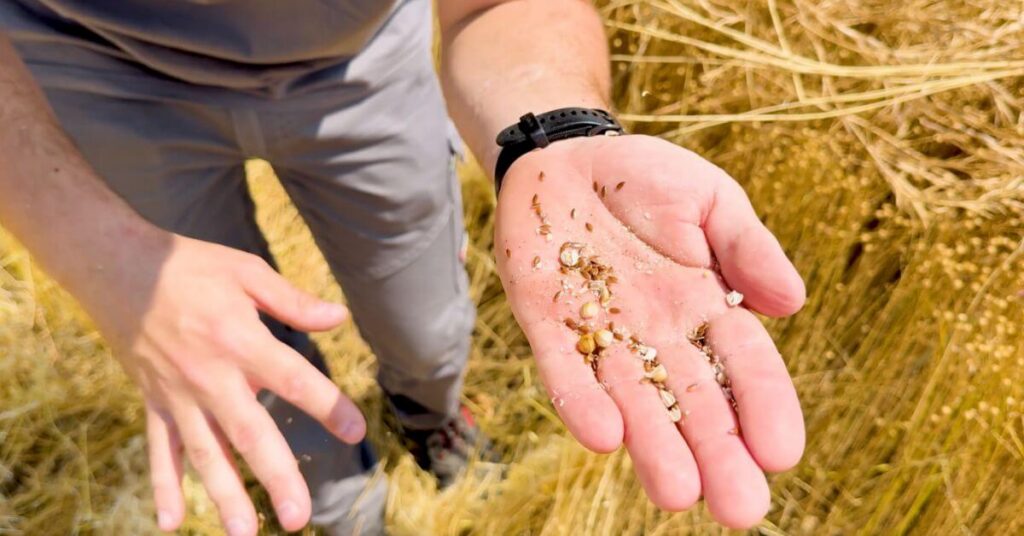
Unlike fiber production, where the stalk’s maturity matters, our focus is on seed quality for human consumption. Flax has four maturity stages—green, green-yellow, yellow, and full maturity—but for us the key is the seed.
Here’s how we decide the right time to harvest:
- Visual check: leaves have dried, stalks have yellowed.
- Physical test: seeds thresh out easily.
- Taste test: ripe seeds crunch between your teeth.
- Moisture testing: we sample plants, thresh them with our Haldrup machine, and check with a moisture meter. Safe harvest begins once seed moisture naturally drops below 9%.
This ensures the grain is safe for storage without worrying about the additional costs for drying.
Why flax harvest is tricky
If you’ve ever harvested flax, you know the problem: the fibers are extremely strong. They wrap around the cutter bar, bearings, and moving parts of the combine. If you’re not prepared, they can bring everything to a stop, or worse, damage the machine.
We’ve tested different combine types and learned this the hard way:
- Rotor combines: not suitable. Flax and hemp residues wrap around bearings and rotors, risking breakdowns.
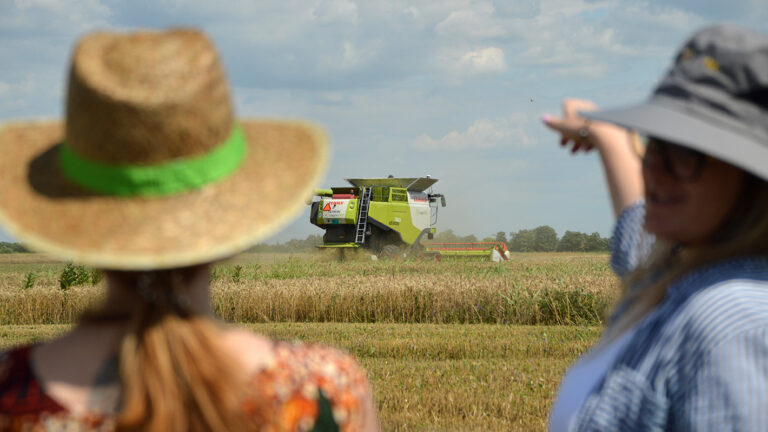
- Straw-walker combines: much safer. Our Claas Lexion 6800 handles flax far better, since there’s less space for fibers to clog moving parts.
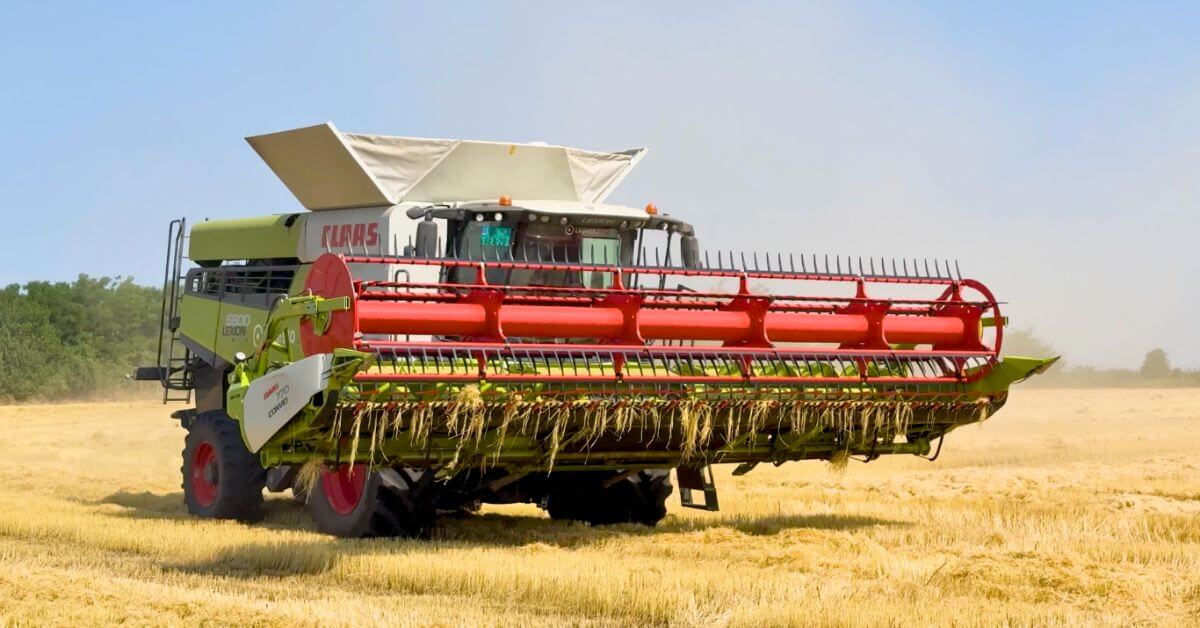
Even then, the header selection remains important. With a shorter MaxFlex header, the reel didn’t push the plants properly into the cutter bar, causing clogging. Switching to the Convio Flex header solved this, thanks to its longer table and closer reel positioning, which feeds in the flax smoothly for clean cutting.
Combine harvester setups for flax harvest
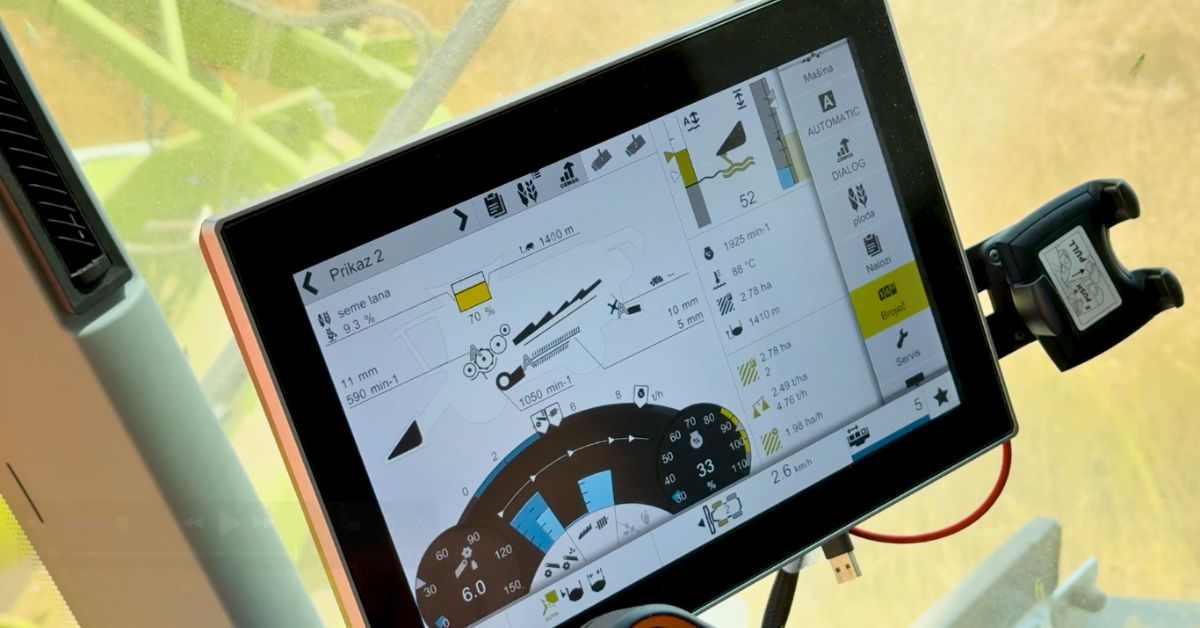
Flax doesn’t come with automatic combine settings, everything has to be done manually. Here’s how our operator set up the Claas Lexion 6800:
- Concave clearance: 11 mm
- Drum speed: 600 rpm
- Fan speed: 1050 rpm
- Upper sieve: 10 mm
- Bottom sieve: 5 mm
- Speed: 3,5–4,5 km/h, depending on weed pressure
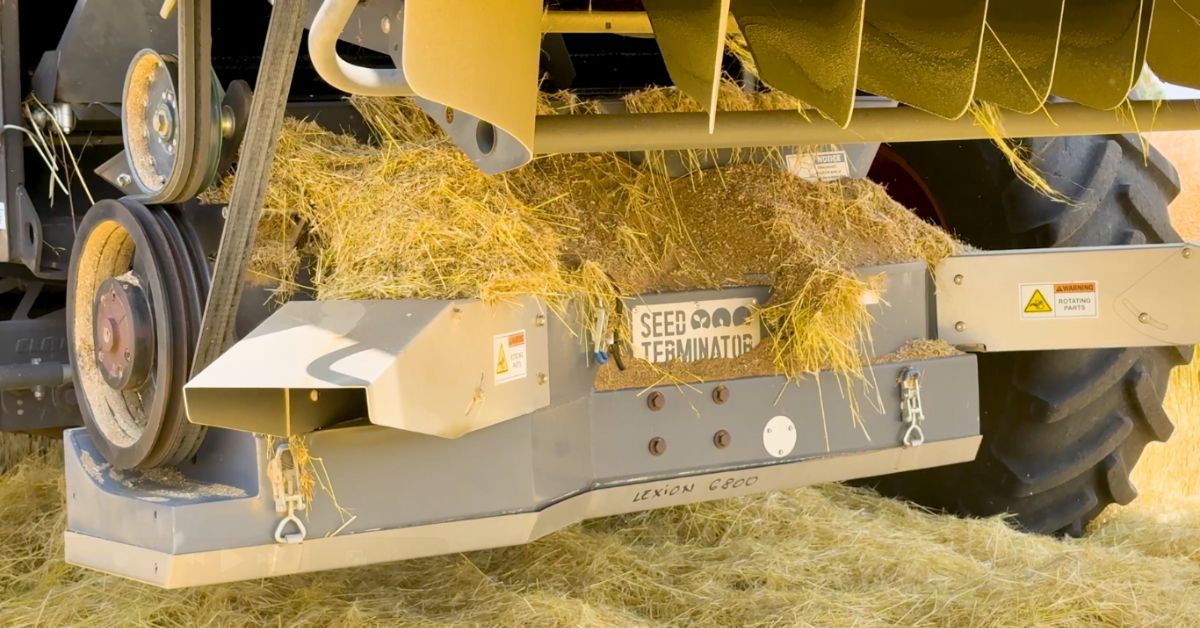
At the back, the combine is equipped with a Seed Terminator. Normally, this device crushes weed seeds, preventing them from germinating in future seasons. But flax is an exception:
- We removed the sieves, since fibers stick to them and clog after every pass.
- We also allowed some straw to bypass the Terminator, as the fibers are too tough to crush effectively.
This customization keeps the combine running smoothly without compromising weed management in other crops.
Managing risks zones and buffer zones
Harvesting flax isn’t just about machines and timing — it’s also about protecting the organic integrity of the crop.
- Buffer zones: Along neighboring conventional fields, we plant strips of green to absorb chemical drift.
- Risk zones: Where buffer zones aren’t possible, we harvest a strip separately and don’t count it as organic.
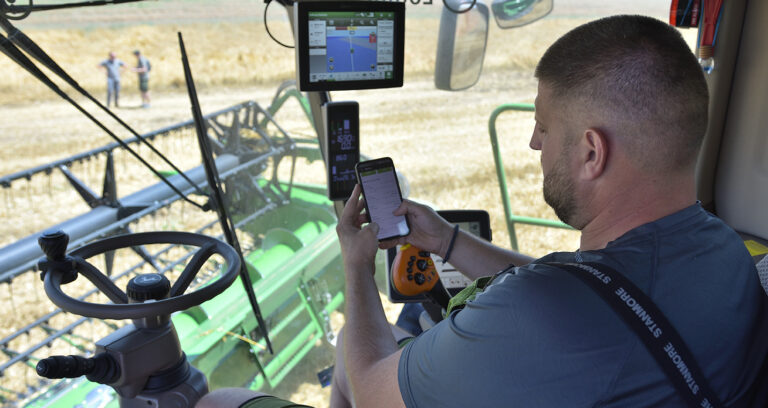
The combine operator uses accurate field maps to know exactly where organic and risk zones start and end. Organic flax is harvested and stored separately, while risk zones are done last. This way, the organic harvest stays clean and compliant.
What flax teaches us every season
Flax is a crop that keeps you humble. Every harvest shows us where we can improve, and while the process is demanding, each year we learn something new that brings us a step closer to farming more efficiently and building practices that can support long-term sustainability.