 Careers
 Poslovi


Combine Harvesters in Organic Farming: How We Harvest Efficiently at Scale
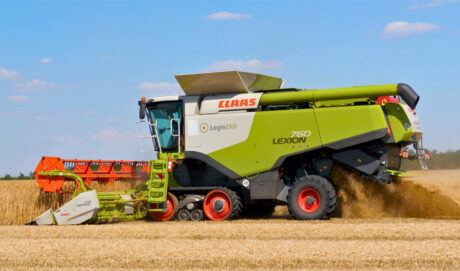
February 20, 2026A practical look at combine harvesters in organic farming—how we use Claas Lexion, John Deere, and Zürn machines across 3.250 hectares.
Read articleA practical look at combine harvesters in organic farming—how we use Claas Lexion, John Deere, and Zürn machines across 3.250 hectares.
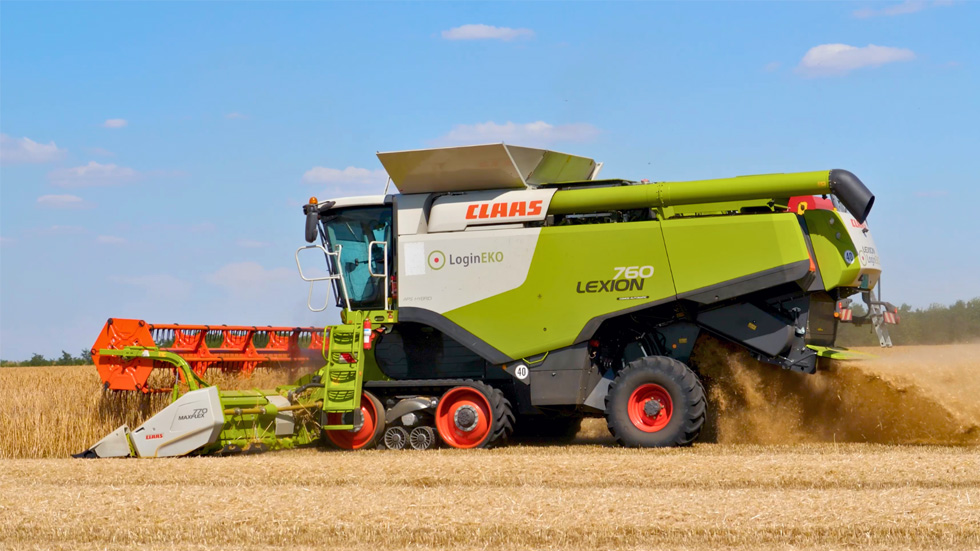
Harvest season is when all agronomic decisions come together. Machine configuration, weed control, crop characteristics, and operational reliability all influence harvest quality and overall system performance.
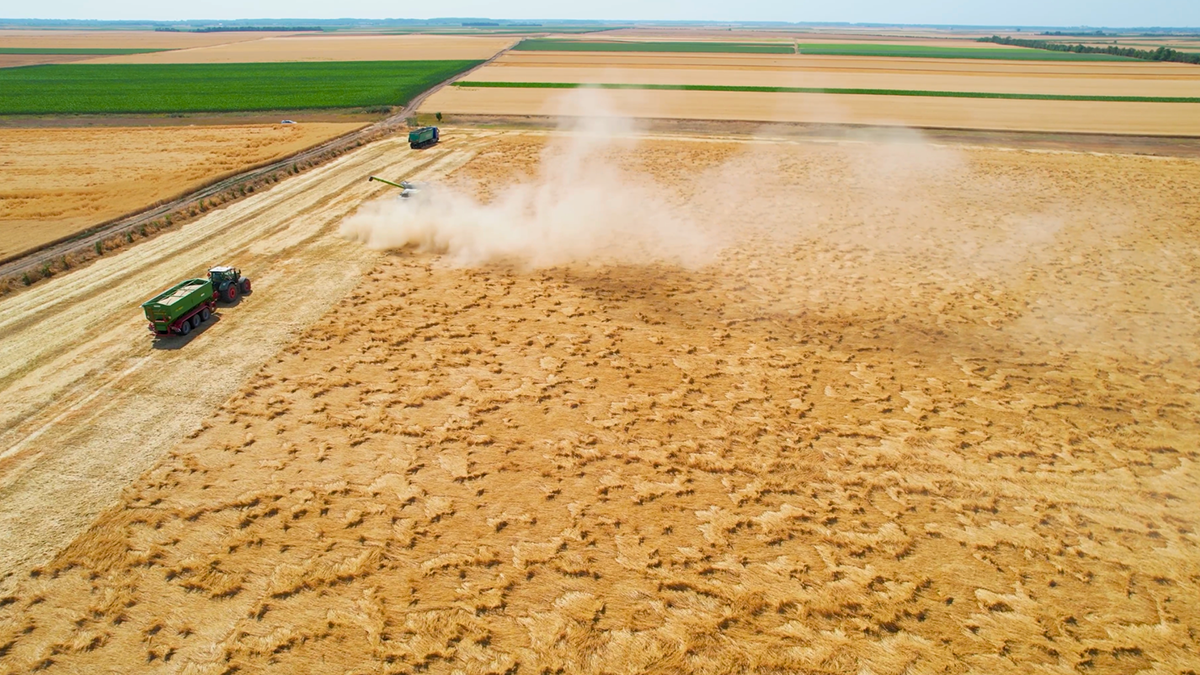
At LoginEKO, we harvest 3.250 hectares of organic arable land across two locations. To do this efficiently and reliably, we operate a diverse fleet of combine harvesters, each selected for specific crops, field conditions, and operational demands.
In this article, we walk you through our combine harvesters in organic farming, explain why we use different machines, and share practical lessons we’ve learned in the field.
Want to see our machines in action? Take a look at our video tour, or continue reading for a detailed breakdown of our seven combines.
Across our northern and southern locations, we operate a total of seven combine harvesters:
The Claas Lexion 760 models are hybrid combines. They use a tangential threshing system with an APS pre-accelerating drum, followed by two axial rotors that continue the grain separation process. The APS drum accelerates the crop mass before it enters the main threshing drum, ensuring stable mass flow and efficient separation.
The Lexion 6800 and John Deere T670i use a tangential threshing system with straw walkers instead of axial rotors. In these machines, separation continues over straw walkers, which behave differently from rotor systems.
Each combine has a specific role. Lexion 760 rotor combines are used across both locations, while straw-walker machines are selected when crop characteristics require a different separation approach. The Zürn combine is used for research and micro-plot harvesting.
The key principle: in organic farming, harvesting technology must match crop biology and field conditions.
Our Lexion 760 combines are equipped with Seed Terminators, an add-on that’s become essential for organic farming.
The Seed Terminator consists of two large mills that grind weed seeds during harvest. By destroying weed seeds before they return to the soil, we reduce future weed pressure directly at harvest.
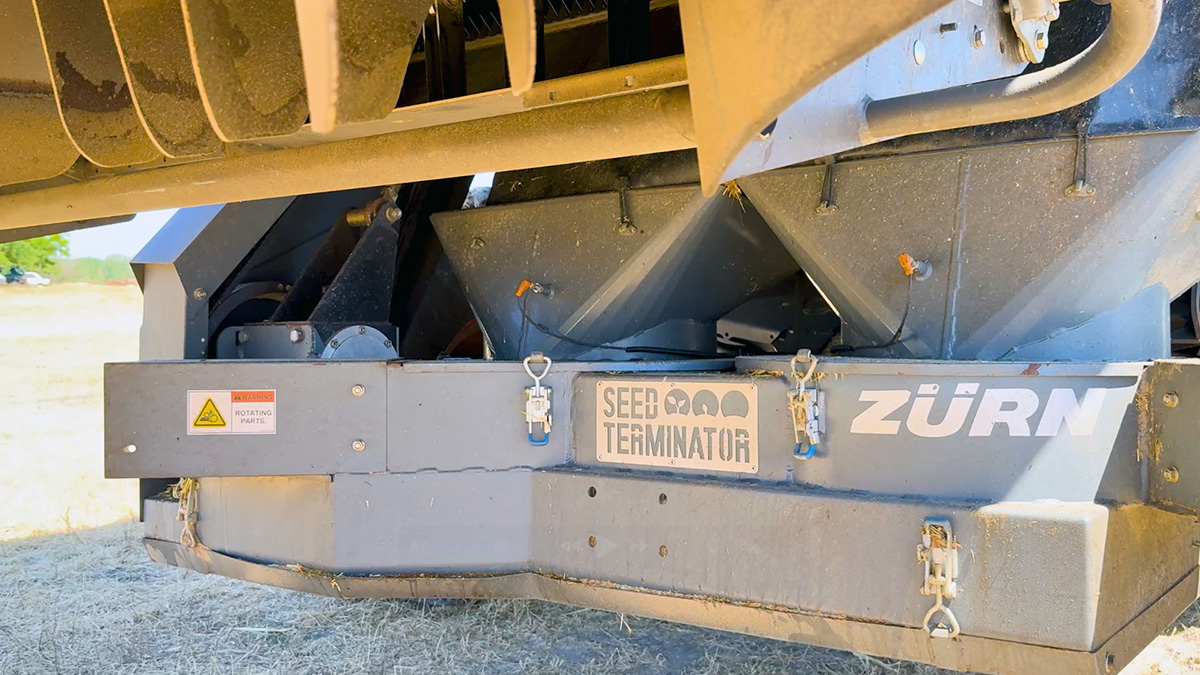
Operators monitor the Seed Terminator from the cab. The same display also shows unloading and chopper cameras, while navigation systems support precise field work.
The John Deere T670i is the only combine in our fleet without a Seed Terminator, because a compatible version was not yet available for this model at the time of purchase.
All of our Claas Lexion 760 combines have MaxFlex headers with a working width of 7,7 meters.
The cutter bar is made of multiple flexible plates that allow the header to adapt closely to uneven terrain.
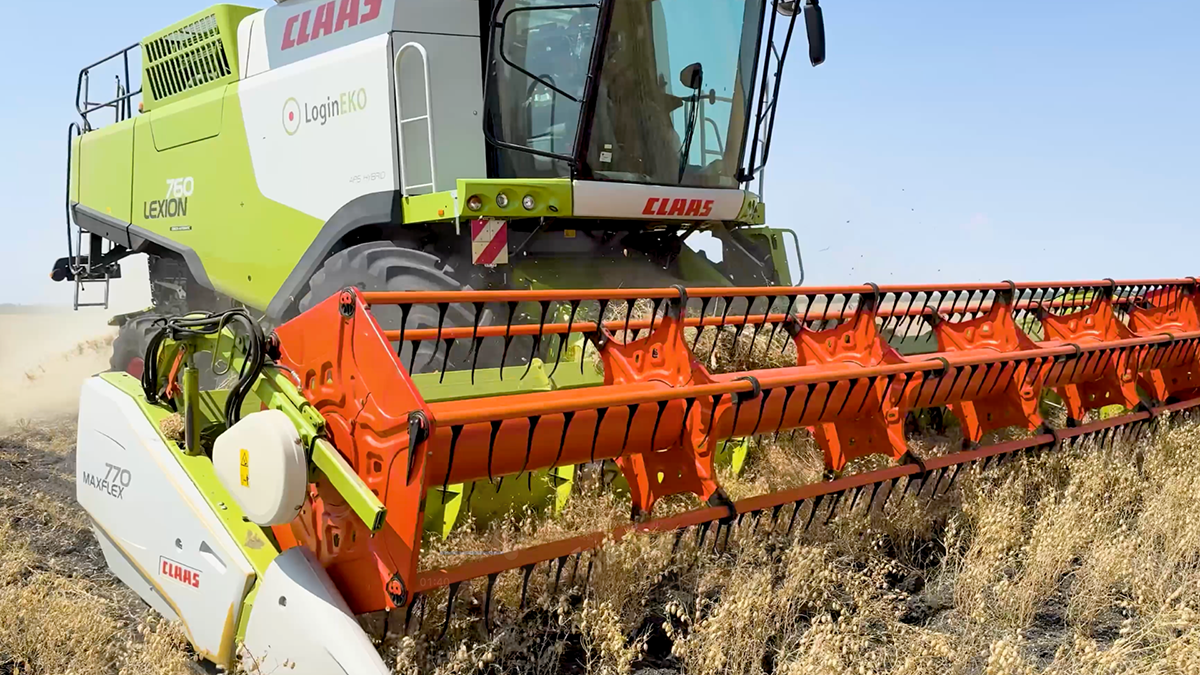
During harvest, the operator can lower the header over small bumps and maintain clean cutting close to the soil surface, without scalping or losing material. This flexibility improves cutting quality and reduces losses, particularly in lodged crops.
The Claas Lexion 6800, on the other hand, works with a Convio Flex header, also 7.70 m wide. Unlike the MaxFlex, the Convio Flex has an extended table and a rubber belt system that feeds the crop into the feeder house. It can technically operate with wider headers (9 m or even 12 m), but wider headers can increase harvesting challenges depending on crop conditions.
Field conditions still influence performance. During the harvest of heavily lodged oats, we had to drive slowly. Because the header table on the MaxFlex is relatively short, crop mass accumulated and entered the auger in large quantities at once. This bent and cracked the auger, putting one header out of service.
Our experience with fiber crops has shaped the way we choose our equipment.
In 2020, we harvested hemp with our Lexion 760 rotor combines. Without previous experience, we encountered serious issues. The fibers wrapped around bearings and rotors, and one rotor had to be completely replaced.
That season taught us a critical lesson: hemp cannot be harvested with rotor combines.
At the same time, we started growing flax, another tough crop with strong fibers. That’s when we decided to buy a Lexion 6800 with straw walkers instead.
Today, we use straw-walker combines, the Lexion 6800 and the John Deere T670i, when harvesting flax. Straw walkers prevent fiber wrapping, which commonly occurs on rotor machines. This makes them more reliable for fiber crops in organic systems.
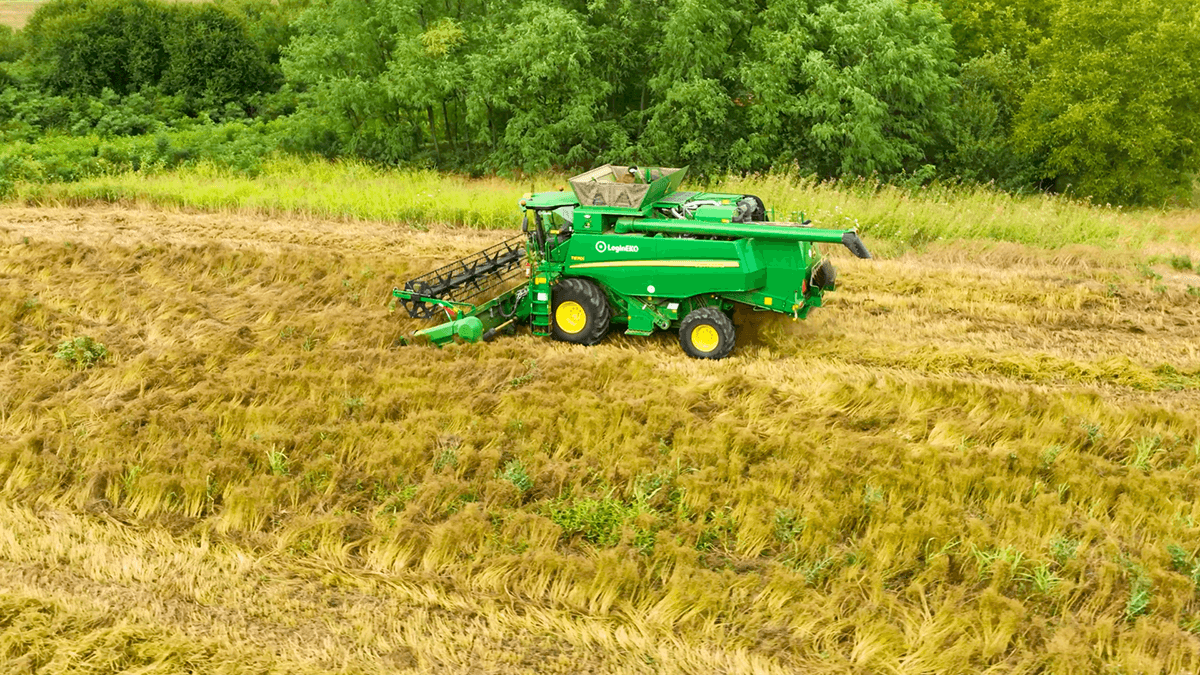
However, even straw-walker combines have their specifics. On the John Deere T670i, the spiral-shaped grain pan can cause hemp fibers to wrap during harvest, which requires careful monitoring.
Because we produce crops exclusively for human consumption, maintaining quality is a key priority for us. Several features help us maintain grain quality:
These adjustments support stable operation and help reduce mechanical damage to grain during harvest.
Running harvests at this scale means being ready for unexpected breakdowns or setbacks.
One example was a major failure on the John Deere T670i.
The multi-plate clutch in the main gearbox failed, immobilizing the combine on the field, about 30 km from our farm. We couldn’t wait for outside help. Our team disassembled it right on the field, replaced the necessary components in our workshop, and returned the machine to operation within eight days. That quick turnaround made sure we finished the flax harvest.
Another case involved broken elevator paddles on the Lexion 6800. The failure likely occurred after one paddle came loose. Since it happened during chickpea harvest, work could continue, but it led us to introduce a new preventive practice: checking elevator chain tension before harvest.
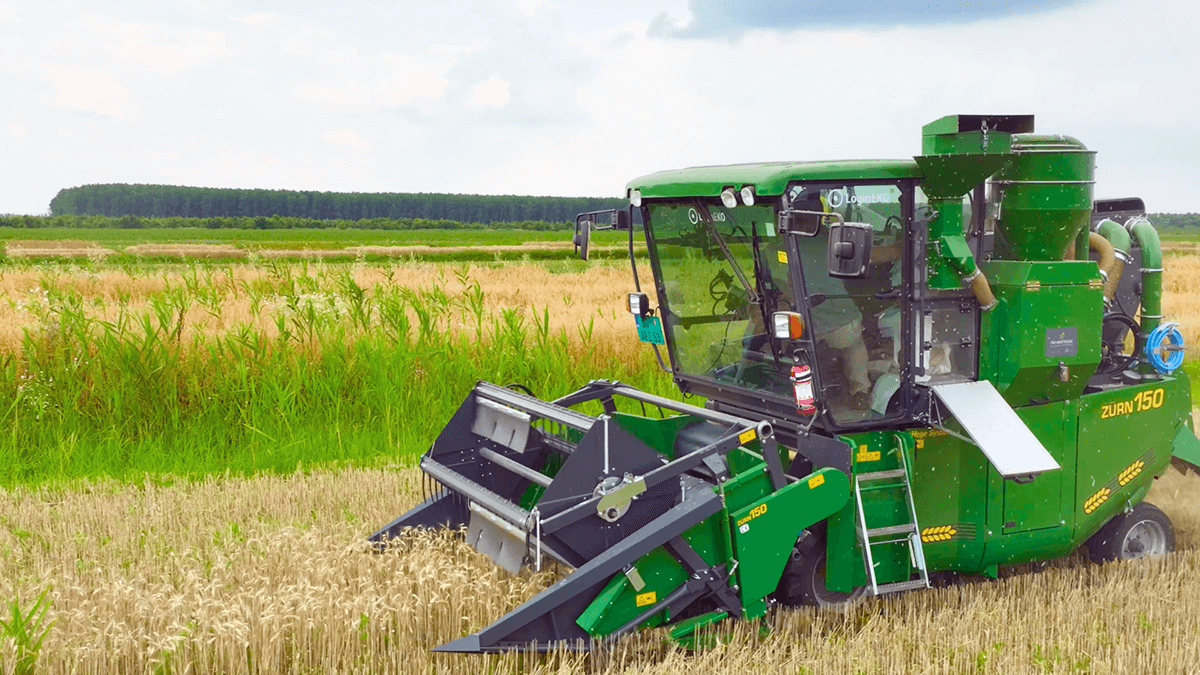
We use the Zürn 150 exclusively for micro-plot harvesting on test plots. It’s equipped with advanced measuring systems that provide real-time data on moisture, hectoliter mass, and grain mass.
If additional analysis is needed, the system can deliver seed samples directly to the cab.
Results are displayed in real time on a tablet, while a second operator manages sample handling and quantities.
This level of precision supports data-driven decisions and helps us scale successful varieties and practices across our larger fields.
Choosing the right combine harvester for each crop, managing material flow, and controlling weeds already at harvest all affect the final outcome. In organic farming at scale, these details matter.
These experiences and decisions are a part of our broader sustainable farming model, and directly influence the results we achieve in the field.
If you want to see how these farming and harvesting practices perform in practice, we publish our full harvest results openly.



A practical look at combine harvesters in organic farming—how we use Claas Lexion, John Deere, and Zürn machines across 3.250 hectares.
Read article
When designed as a system, organic farming can deliver stable yields and food-grade quality at scale. Our 2025 harvest results show what that looks like in practice.
Read article
A look back at 2025 at LoginEKO: large-scale organic farming results, plant-based nitrogen, open traceability, farming software, and food development.
Read article