 Careers
 Poslovi

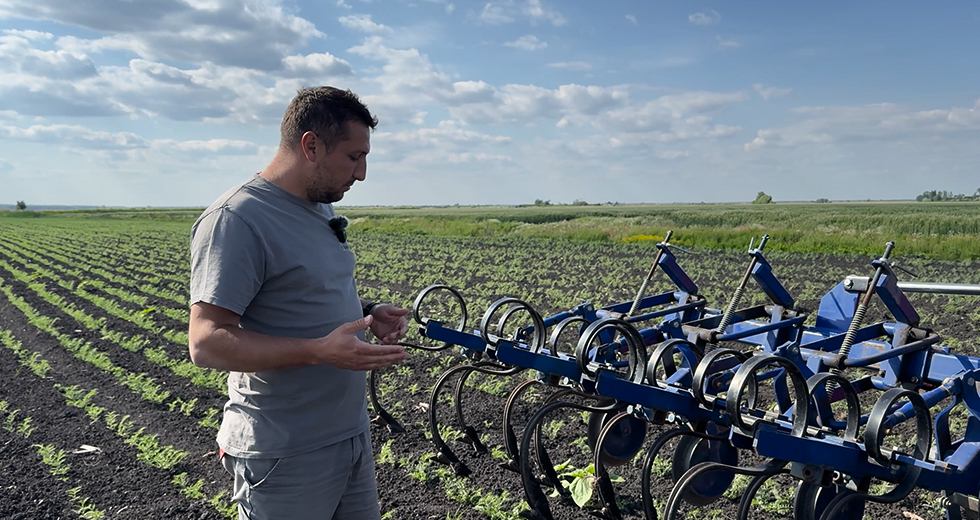
If you caught the first part of our chickpea series on seedbed preparation and sowing, you already know that growing chickpeas organically takes planning and precision. Now, in part two, we’re diving into weed control after emergence and inter-row cultivation.
Join us in Novi Kneževac and watch the full video to see how we do it in action.
Why chickpeas need repeated weed control
Chickpeas are sensitive to weed competition. They don’t close rows like soybeans or grow tall and broad like sunflowers. Without regular intervention, weeds can easily take over.
In this field:
- We handled the first two flushes during seedbed preparation,
- we followed up with a pass after sowing but before emergence,
- then another post-emergence pass using the Rotarystar.
With Rotarystar, it’s not about eliminating every weed. One pass typically removes 20-30% of weeds and pulls out small weeds, loosens the soil and supports chickpeas in outcompeting weeds.

Then it’s time for inter-row cultivation with the Tupanjac cultivator.
We’re using a 6-meter-wide Tupanjac cultivator set to 50 cm row spacing. In terms of weeds, we’re targeting foxtail, volunteer sunflower, citron melon, and Canada thistle.
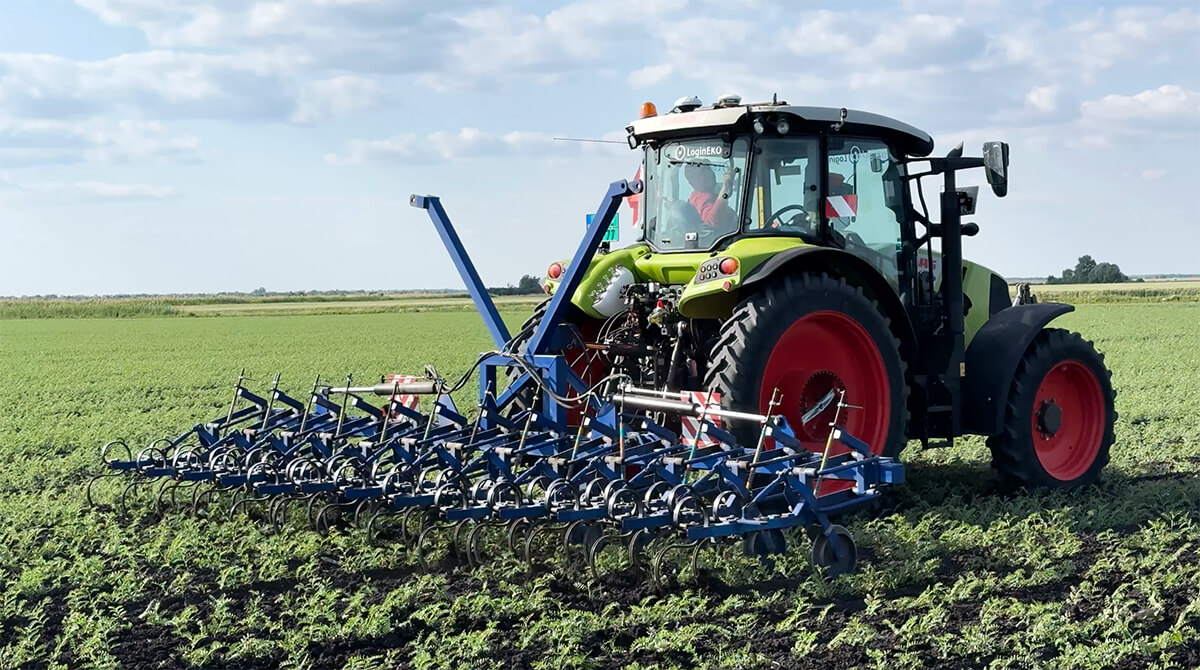
The first inter-row cultivation is one of the most important operations in organic chickpea farming. What’s key is matching the depth of the cultivator speed to get the best effect, which will carry over to the next inter-row cultivation and the rest of the growing season.
What’s next?
After that, we continue monitoring weed pressure and adjusting interventions as needed. Every field is different, and in organic farming, there’s no one-size-fits-all.
Missed the first part? See how we do seedbed preparation and manage early weed control. And stay tuned for our harvest plans for chickpeas.