 Careers
 Poslovi
Combine Harvesters in Organic Farming: How We Harvest Efficiently at Scale
February 20, 2026A practical look at combine harvesters in organic farming—how we use Claas Lexion, John Deere, and Zürn machines across 3.250 hectares.
Read article
Spoiler alert: Not all wheat varieties are great for organic conditions
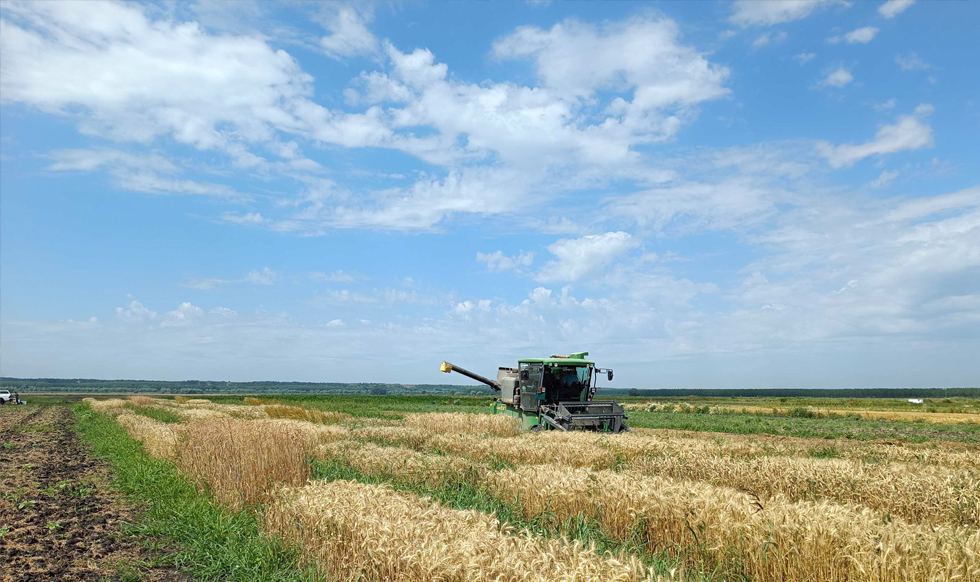
This article was originally published on January 12, 2024, and updated on November 26, 2024, to include the latest insights and results from our wheat screening trials.
Modern wheat varieties were developed to thrive in environments reliant on fertilizers and pesticides. However, it remains unclear whether they can perform well in more challenging conditions, such as those found in organic production, where synthetic inputs are not used.
To understand which varieties are best suited to our organic food production, we tested them with screening trials. But why do we even need different varieties?
(Organic) farmers need different varieties of wheat for multiple reasons:
The solution: Wheat screening trials
Wheat screening trials are a special type of trials that determine the best variety out of many. How did we run them?
To minimize uncontrolled variability and ensure reliable results, we implemented a randomized trial design in both years, guaranteeing scientifically validated findings.
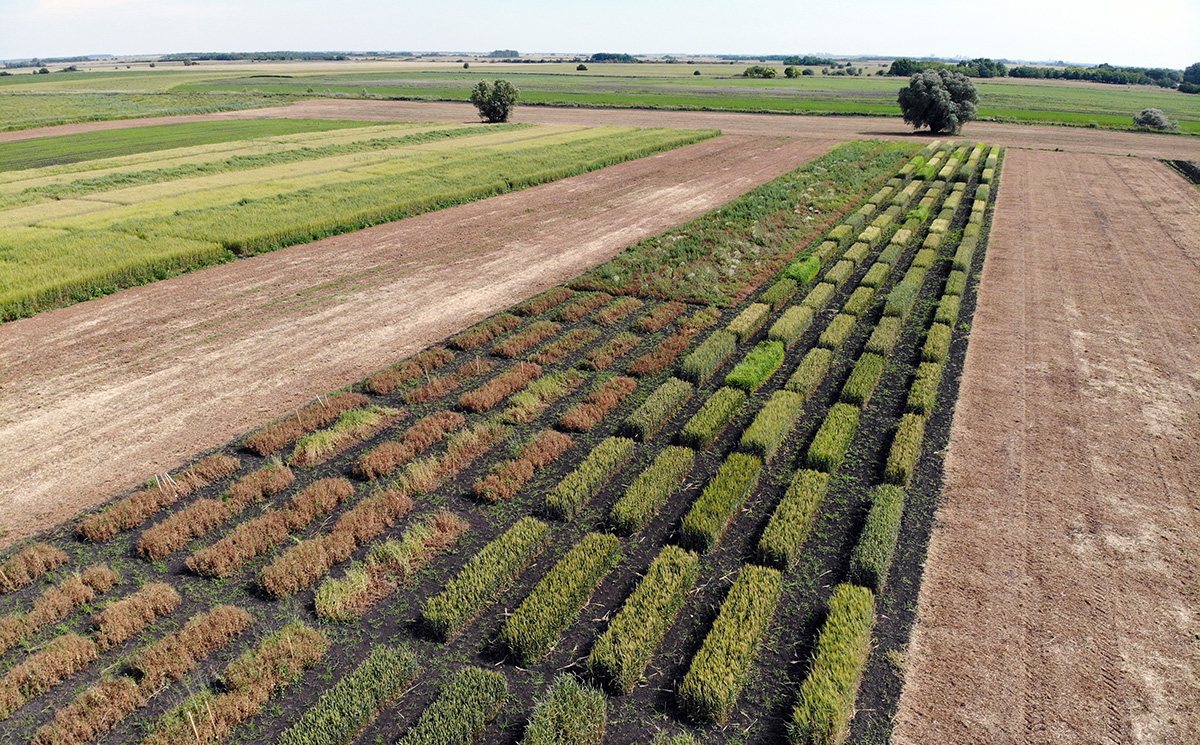
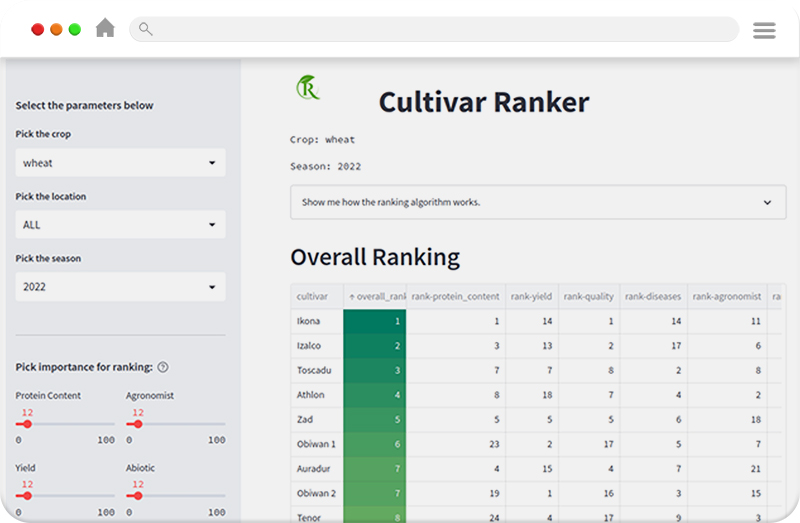
In 2023, out of the 22 tested winter wheat varieties, Ikona and Izalco demonstrated the best trade-off between production quality (such as wet gluten, protein content, yield, and hectolitre mass) and resistance to disease and weed competition. These varieties have also shown consistent performance in the 2024 trials.
| Winter wheat variety | Ikona 2023 | Ikona 2024 | Izalco 2023 | Izalco 2024 |
| Yield [t/ha] | 5.6 | 8.6 | 5.7 | 8.3 |
| Seed protein [%] | 13.8% | 15.4 | 13.6% | 14.3 |
| Hektoliter mass [kg/hl] | 81.7 | 80.5 | 82.8 | 80.7 |
| Wet gluten [%] | 34.9% | 30.0 | 31.7% | 26.0 |
| Resistance to Yellow stripe rust disease [1-9] | 7 (high resistance) | 6 (mid resistance) | 5.67 (mid resistance) | 8.6 (resistant) |
As shown, no variety excels in every metric. Ikona stands out for its higher protein content, wet gluten, and resistance to yellow stripe rust disease, while Izalco offers higher yields and hectolitre mass.

At LoginEKO, we’ve made a strategic shift to focus entirely on gluten-free production, aligning with rising consumer demand for healthier and more sustainable food options. As a result, we will no longer grow wheat or conduct winter wheat screening trials.
Instead, we’re prioritizing gluten-free crops, such as oats, chickpeas, and flax, expanding crop areas, ensuring purity through advanced testing, and sharing our tools and insights for free to help other farmers transition to gluten-free farming.

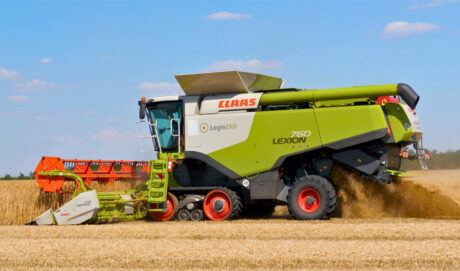

A practical look at combine harvesters in organic farming—how we use Claas Lexion, John Deere, and Zürn machines across 3.250 hectares.
Read article
When designed as a system, organic farming can deliver stable yields and food-grade quality at scale. Our 2025 harvest results show what that looks like in practice.
Read article
A look back at 2025 at LoginEKO: large-scale organic farming results, plant-based nitrogen, open traceability, farming software, and food development.
Read article